
Most homeowners rarely think about their attic. It’s simply the space above the ceiling—out of sight, behind a small access panel that might only get opened once in a while. But in a hot humid climate like Florida, what happens in that space has a direct impact on comfort, energy use, and how hard your home has to work during the hottest months of the year.
I’m currently adding insulation to the attic of my 1983 Florida home, and before doing so, I decided to document what was already there. I took photos, measured temperatures, and used a FLIR thermal camera attachment on my phone to better understand how heat was actually moving through the attic and into the living space below.
What I found is very typical of many older Florida homes.
A Look Inside a Typical Florida Attic
When people imagine an attic, they often think of open rafters. But most homes built in the last several decades use engineered roof trusses instead.
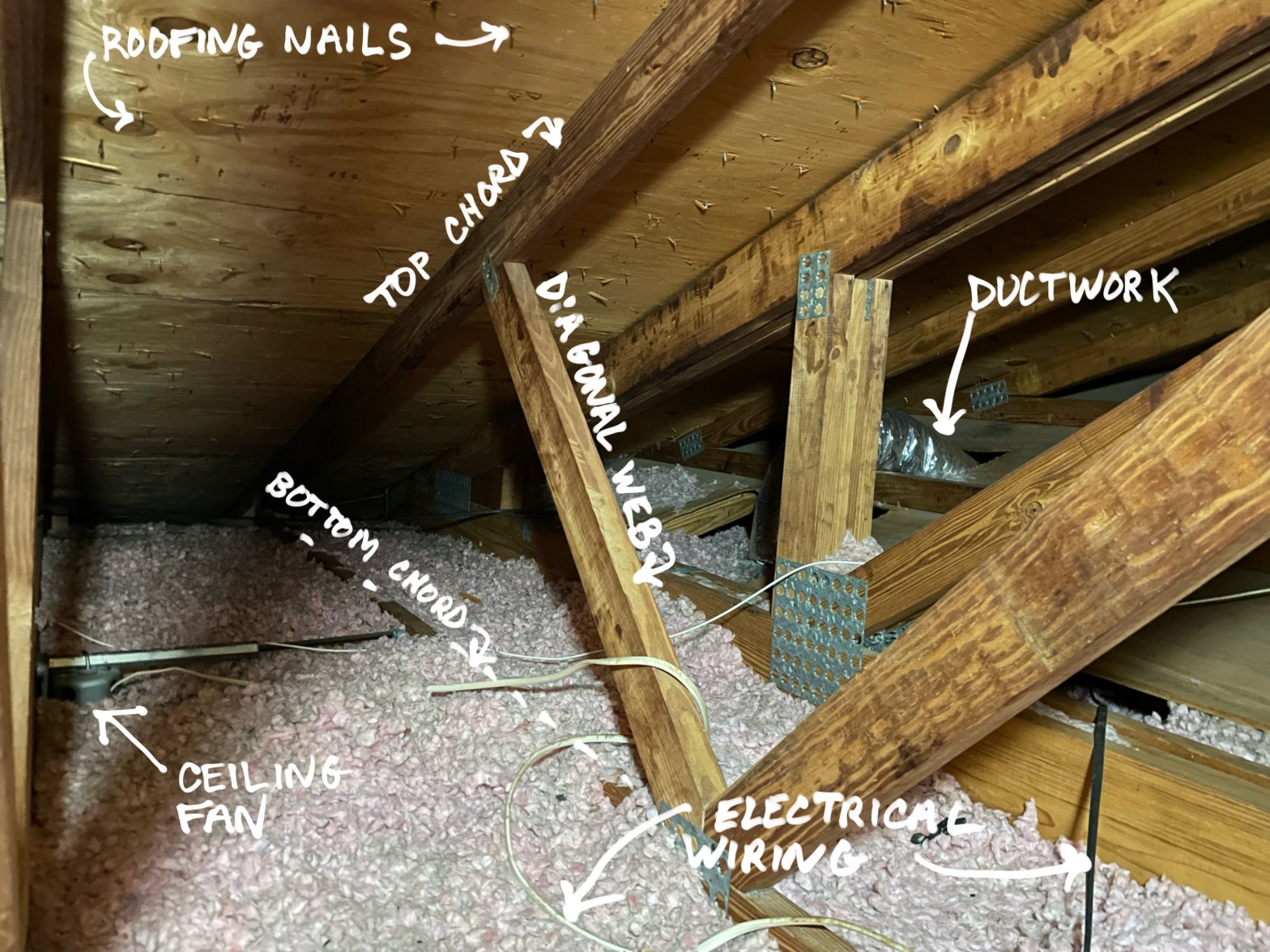
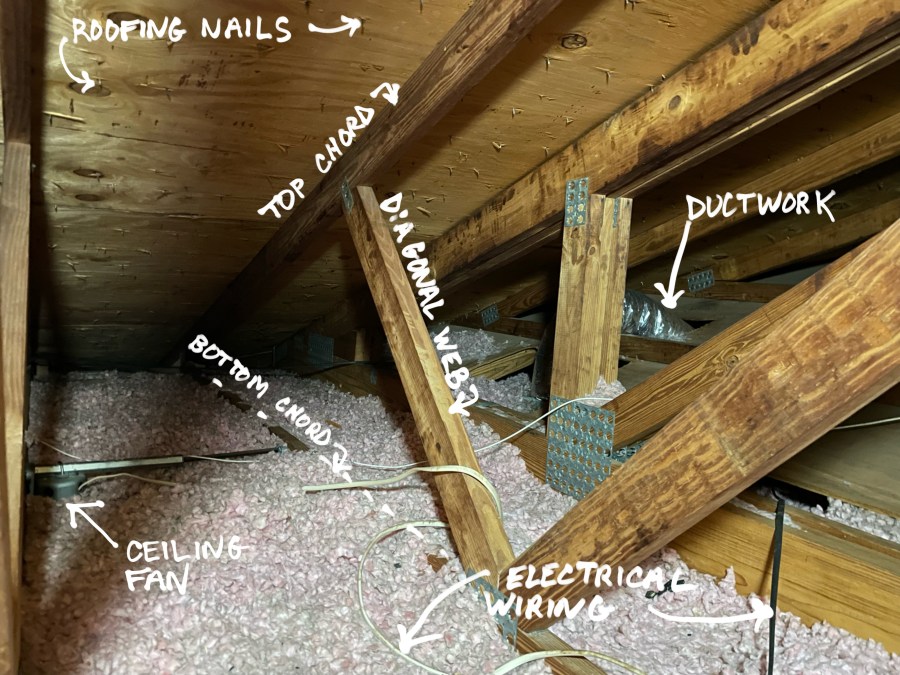
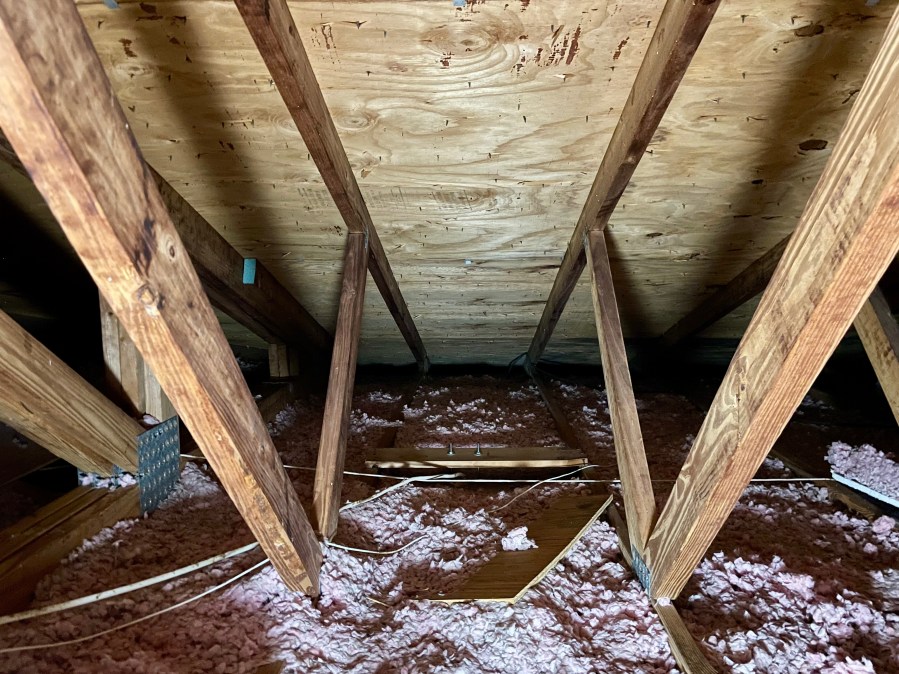
Inside this attic, you can see:
- roof trusses with upper and lower chords and diagonal web members
- metal connector plates at each joint
- the underside of the roof sheathing with roofing nails protruding through
- electrical wiring running across the attic floor
- flexible ductwork for the HVAC system
- and even the top of a ceiling fan housing from the room below
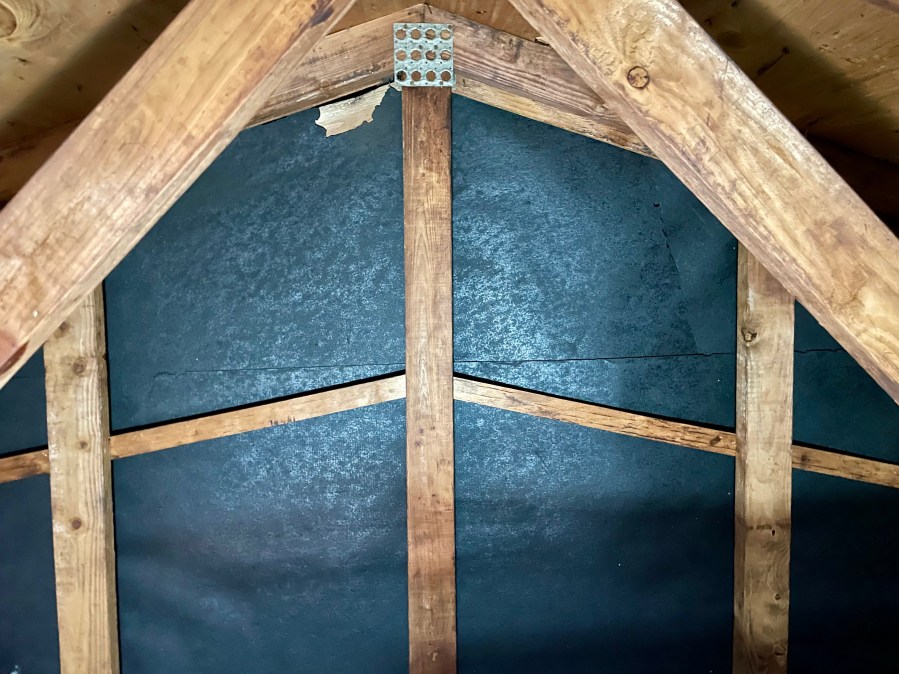
In one area, you can also see the inside face of the gable end. Because there is no plywood on that portion, the black roofing felt is visible behind the siding, attached directly to the exterior face of the gable truss.
Most homeowners never see these components, but they are always there—working together as part of the building system.
What I’ve Done to This House Over Time
About 15 years ago, I added insulation to two sections of this attic. However, the way the house was originally constructed, it created three separate attic spaces that are not open to each other. The section I’m working on now is the third and final attic zone.
Over time, I’ve also made other energy-related improvements to the house, including insulating the concrete block exterior walls. Like many Florida homes, the original construction included only minimal interior insulation, and over the years those assemblies are often interrupted by plumbing, wiring, and other penetrations.
This is not unusual—it’s simply part of how existing homes evolve over time.
The Attic Was Already Hot by Mid-Morning
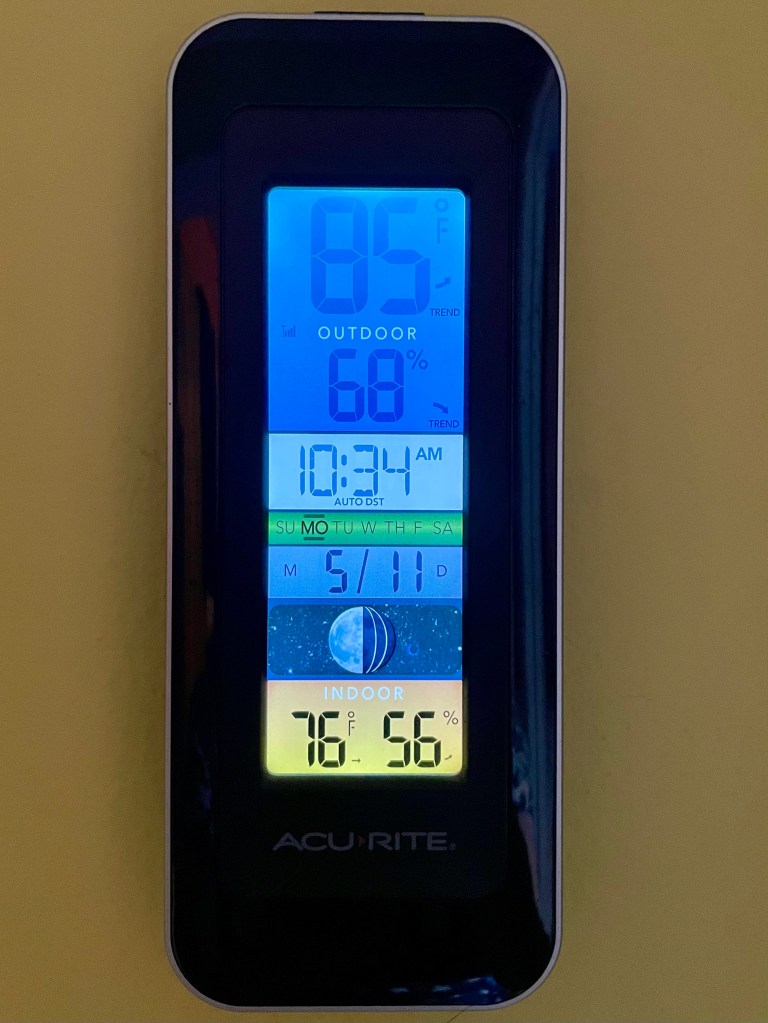
At around 10:30 a.m., outdoor conditions were 85°F with 68% humidity. Inside the home, the thermostat read 76°F with 56% humidity.
Using the FLIR camera, I took a series of thermal images at the attic access opening.
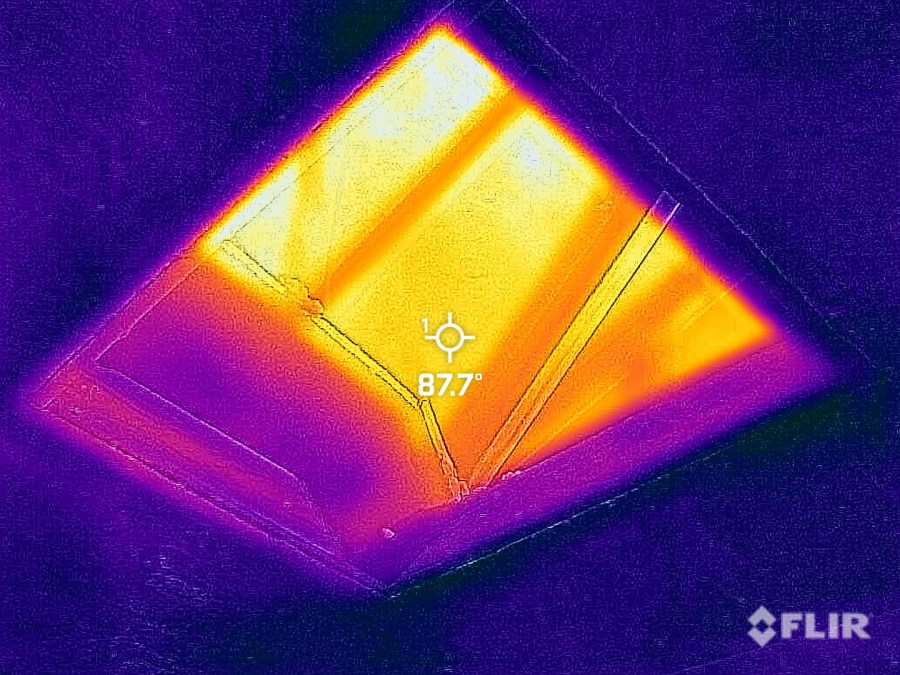
With the attic access open:
- the underside of the roof in the attic measured approximately 87.7°F
- the surrounding ceiling showed much cooler interior temperatures
Even though the outdoor temperature was 85°F, the attic was already hotter due to solar heat absorbed by the roof surface and trapped in the attic space.
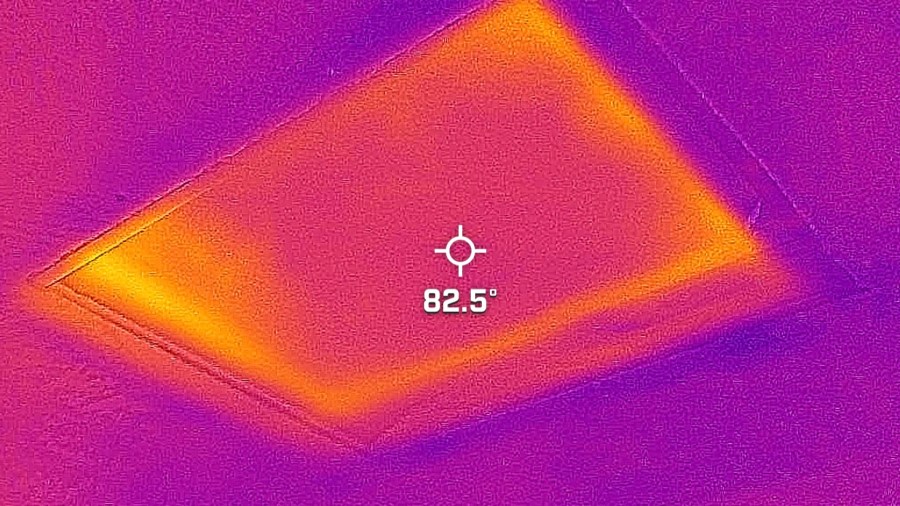
When the attic access door was closed, the thermal image changed:
- attic access panel: about 82.5°F
- adjacent ceiling surfaces: about 81.6°F
- interior room temperature: 76°F
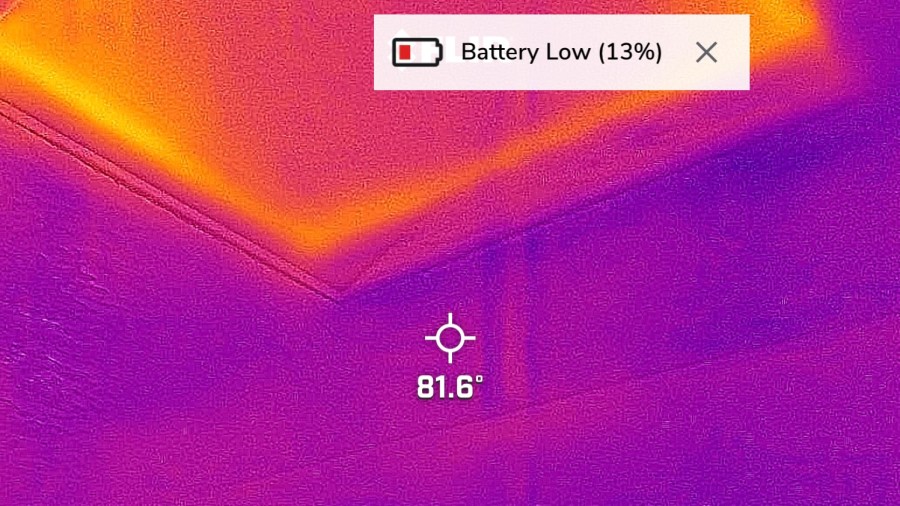
This shows something important: insulation doesn’t cool the room. Instead, it slows the transfer of heat from the attic into the conditioned space below.
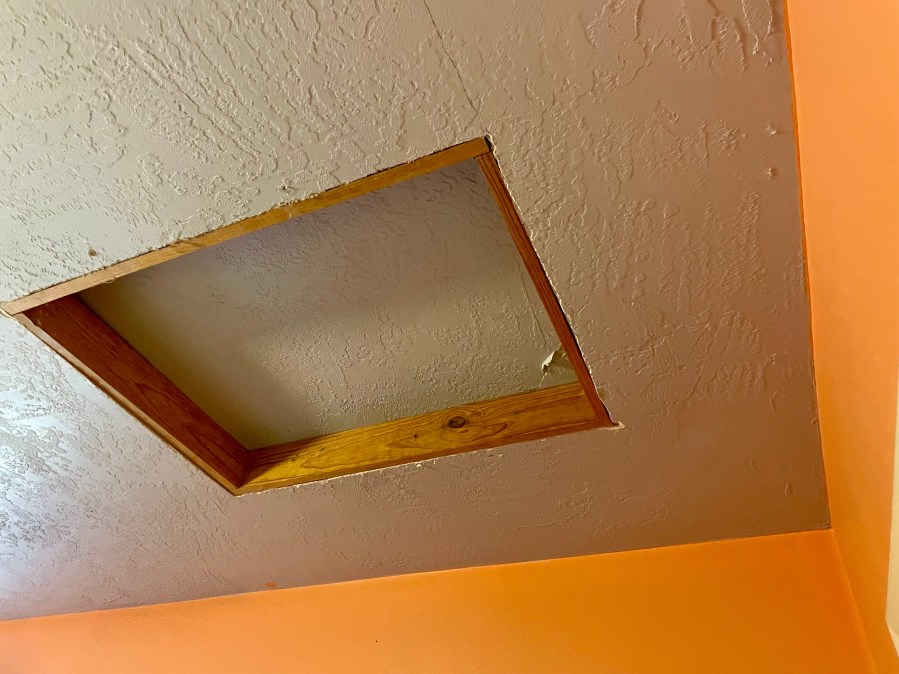
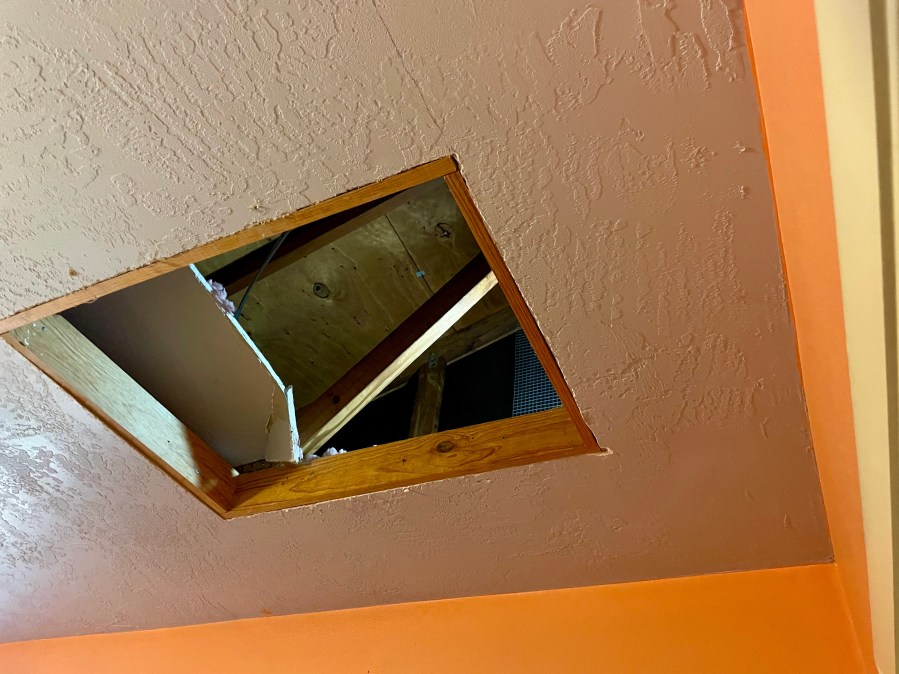
One detail that often gets overlooked is the attic access itself. Even though it seems like a small opening, it is still a direct break in the insulation layer between the attic and the conditioned space below.
In this case, the attic access panel measured noticeably warmer than the interior ceiling surfaces, which is typical when the panel is not insulated or air-sealed. In practice, improving this condition is usually straightforward—adding rigid insulation to the attic-side of the panel and installing weatherstripping around the perimeter of the opening helps reduce both heat transfer and air leakage.
It is a small detail, but like many small details in a house, it can have a measurable impact on overall comfort.
What the Existing Insulation Looks Like
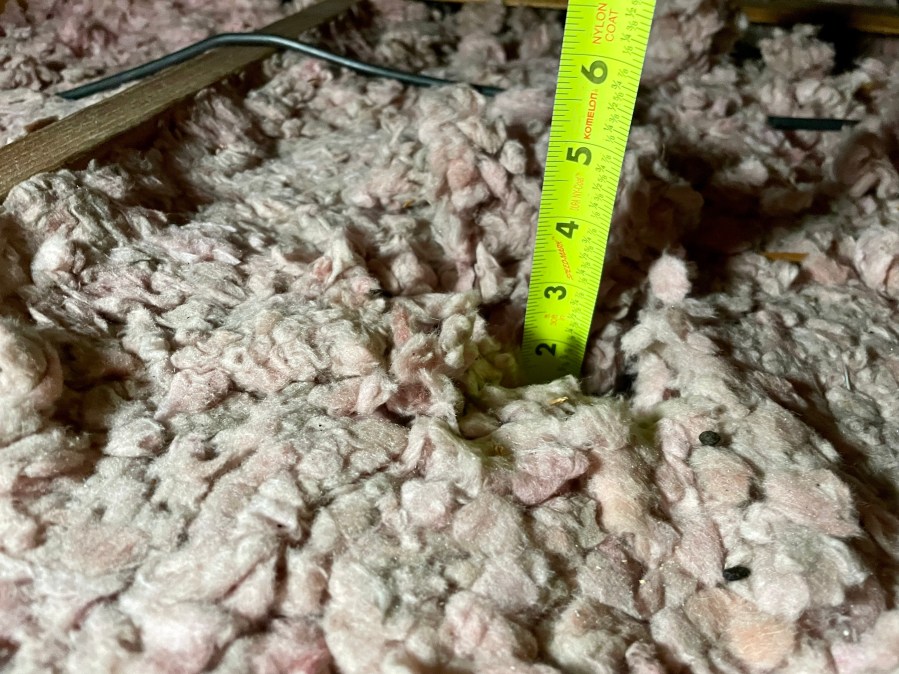
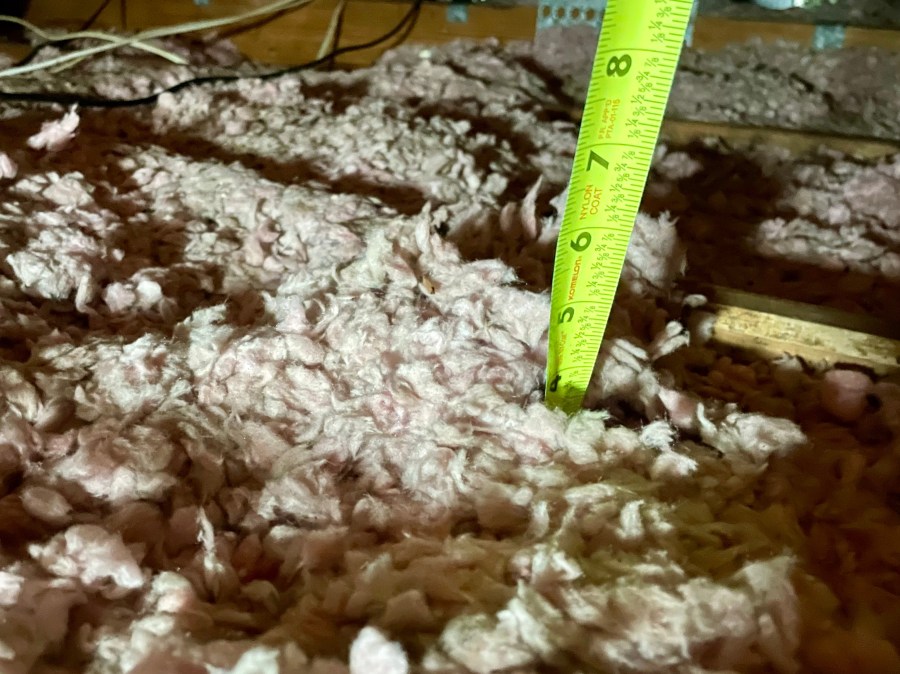
The attic contains loose fiberglass insulation laid across the ceiling between trusses.
Measurements show:
- approximately 2 to 2½ inches in some areas
- up to about 4 inches in other areas
However, the depth is not consistent. In many places, the insulation surface rises and falls unevenly—almost like the rolling hills of a golf course. Some areas have settled lower over time, while others remain higher.
In many areas, the insulation is not even deep enough to fully cover the 2×4 bottom chords of the trusses.
What that means in performance
Loose fiberglass insulation typically provides about R-2.5 to R-3.5 per inch, depending on density and condition.
In this attic, that translates roughly to:
- 2.5 inches ≈ R-6 to R-9
- 4 inches ≈ R-10 to R-14
This means many older homes are operating with a fraction of today’s recommended insulation levels.
What Modern Construction Would Do Today
If this house was built today, attic insulation requirements would be significantly higher than what was common in 1983 construction.
Current energy standards generally require approximately:
- R-30 minimum in some edge conditions
- R-38 in most attic applications
In practice, we typically recommend R-38 regardless, because consistency and coverage are just as important as total depth.
One of the biggest challenges in existing homes is achieving full insulation depth at the edges of the attic where the roof meets the exterior walls. Older truss systems were not designed to accommodate today’s insulation thicknesses, which often results in reduced coverage exactly where heat gain can be most significant.
In new construction, this is something we would design around intentionally. Roof trusses can be detailed with deeper heel heights so that insulation can extend fully over the exterior wall line while still maintaining proper ventilation above it.
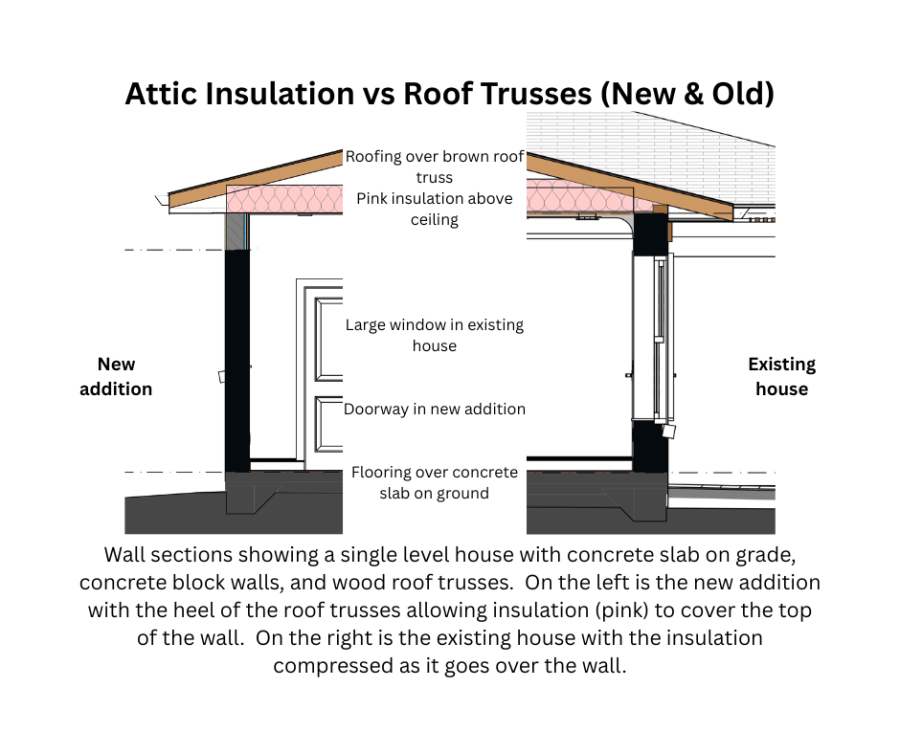
The diagram above compares how this changes performance. On the left is a new construction condition where the truss heel is raised to accommodate full insulation depth over the exterior wall. On the right is a typical existing condition, where the roof geometry limits insulation depth at the edge, causing it to taper or compress right where thermal protection is most needed.
In some cases, insulating the underside of the roof deck with spray foam can create a more continuous thermal boundary. However, in existing homes—especially where ceilings are not being removed—this approach is often not practical to implement after the fact.
So in retrofit situations, the goal is usually improvement rather than perfection:
better coverage, fewer gaps, and more consistent performance than what existed before.
Why This Matters in Florida
In hot humid climates, attic conditions directly affect:
- indoor comfort
- air-conditioning efficiency
- energy consumption
- system workload
- and how quickly a home heats up during the day
Homes with ductwork running through the attic are especially sensitive, since the ducts are exposed to high temperatures for much of the year.
Even modest improvements in insulation coverage and consistency can improve comfort and reduce temperature swings inside the home.
Looking Above the Ceiling
One of the most interesting things about homes is how much of their performance depends on systems you never see.
People naturally focus on finishes—flooring, paint, cabinetry—but the attic tells a very different story about how a home actually behaves.
What this small exercise revealed is simple:
- the attic is not a passive space
- it is an active part of the building system
- and its conditions matter far more than most homeowners realize
Sometimes, opening the attic access panel is one of the most educational things you can do as a homeowner.
A Practical Next Step
Understanding what is happening above the ceiling is often the first step in improving how a home actually performs. Small changes in insulation, air sealing, and overall design coordination can have a noticeable impact on comfort and efficiency over time.
If you are considering improvements to an existing home, or thinking about designing a new home that performs well in a hot humid climate, you can learn more at Design Freedom, Inc.

