
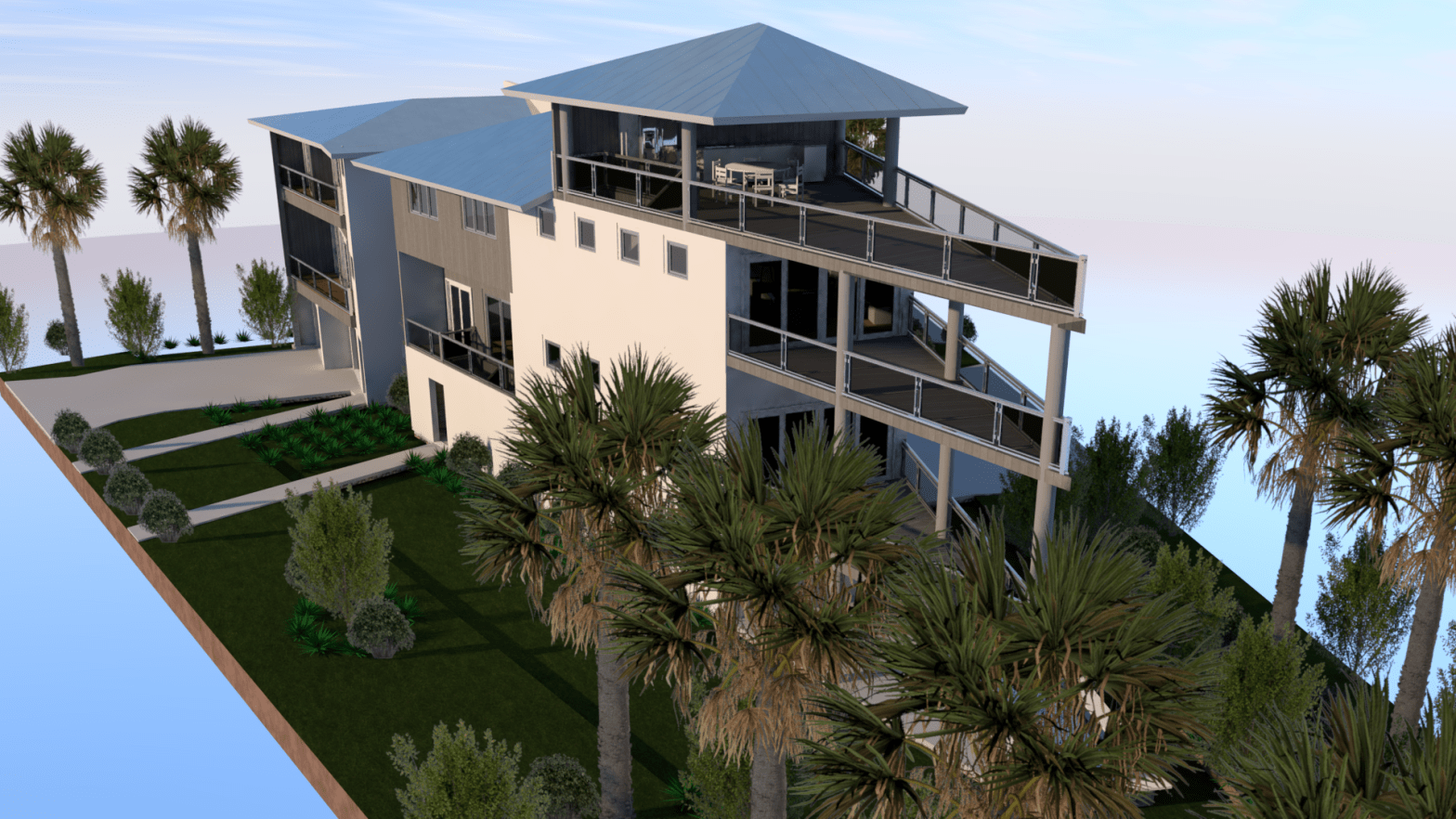
One of the first questions homeowners ask when planning a remodel or addition is: “How much is this going to cost?” And honestly, it’s one of the trickiest questions to answer at the very start. Every home, every project, every location is different. But that doesn’t mean you’re flying completely blind. Having a ballpark number early on can help you make smarter decisions and keep your project on track.
Even before drawings exist, understanding potential costs helps you prioritize what matters most. It also gives your Architect the freedom to explore creative solutions that fit your budget rather than designing around guesswork. Early budgeting reduces surprises later—and who doesn’t want to avoid a stressful money shock halfway through construction?
Rule-of-Thumb Estimates: A Starting Point
At the beginning, we rely on what we call Rule-of-Thumb Estimates. These are based on previous projects of similar size, scope, and finishes. They aren’t perfect, but they give you a sense of what’s realistic.
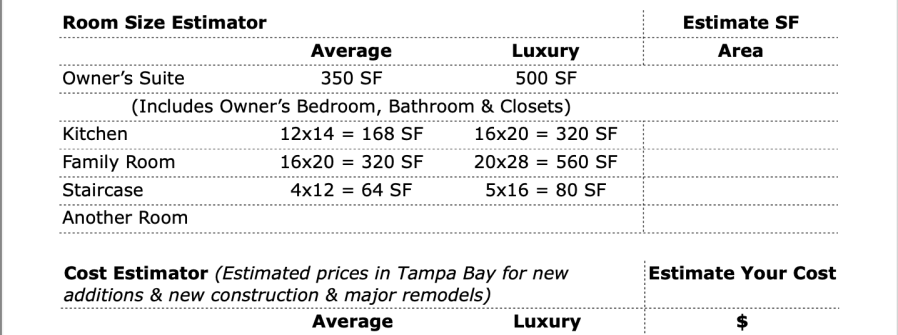
In Tampa Bay, a general range for new additions, major remodels, or new construction is about $400 per square foot for average-quality work and $600 per square foot for luxury finishes. Keep in mind, these numbers cover construction only; cabinets, appliances, and fixtures are additional, and every project has its own unique factors that will affect the final price.
Some Ballpark Numbers to Consider
To give you a sense of scale, here are a few common addition types we see in our projects.
An Owner’s Suite addition—including the bedroom, bathroom, and walk-in closets—typically costs around $140,000 for a 350-square-foot average-level suite. If you’re thinking luxury finishes and a 500-square-foot space, you’re likely looking at about $300,000.
A kitchen addition or major expansion follows a similar pattern. Construction for an average 350-square-foot kitchen might come in around $140,000, while a 500-square-foot luxury kitchen could reach $300,000. Remember, cabinetry, appliances, and fixtures will be additional, but this gives you a solid baseline for planning.
For a family room addition, the numbers are slightly different because of the larger space. An average 320-square-foot family room could cost about $128,000, and a luxury 560-square-foot space might be closer to $336,000. These ranges give you a practical idea of how size and quality affect cost—and why it’s so important to think about both when planning your project.
What Can Affect Costs
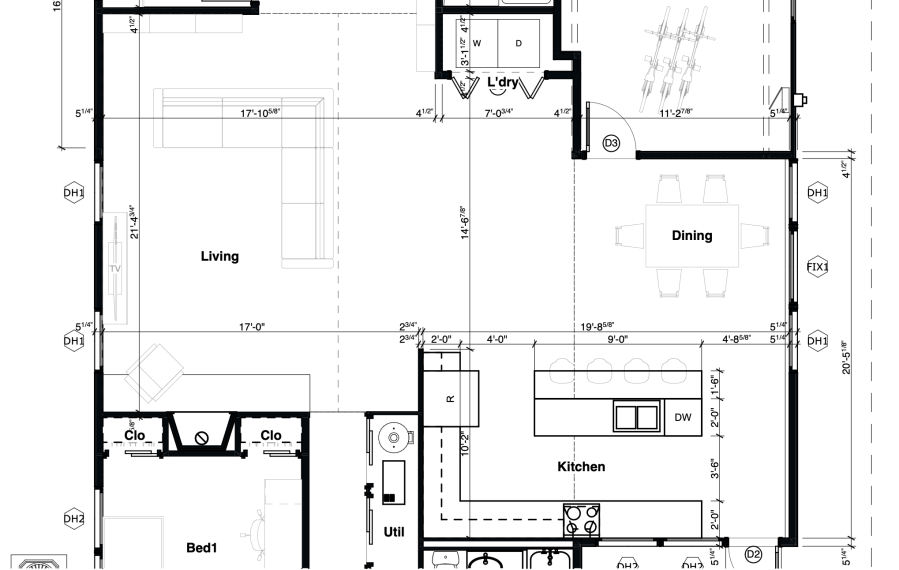
Of course, square footage isn’t the only factor. There are a few things that can significantly change your construction costs. For instance, homes built on elevated foundations—common near the beach or in flood-prone areas—require more materials and labor. High-end kitchens and bathrooms with custom cabinets, premium countertops, and high-end fixtures will also increase costs.
Even details like vaulted ceilings or large expanses of glass can add up. And structural choices, like using steel beams to support wide openings instead of wood, can have a noticeable impact.
Material choices matter, too. Concrete block construction is more durable, fire- and wind-resistant, and can even lower insurance premiums, while wood framing may be less expensive initially but sometimes requires more maintenance over time. Discussing these options early allows your Architect to design a home that meets your aesthetic, functional, and budgetary goals.
Saving Smartly
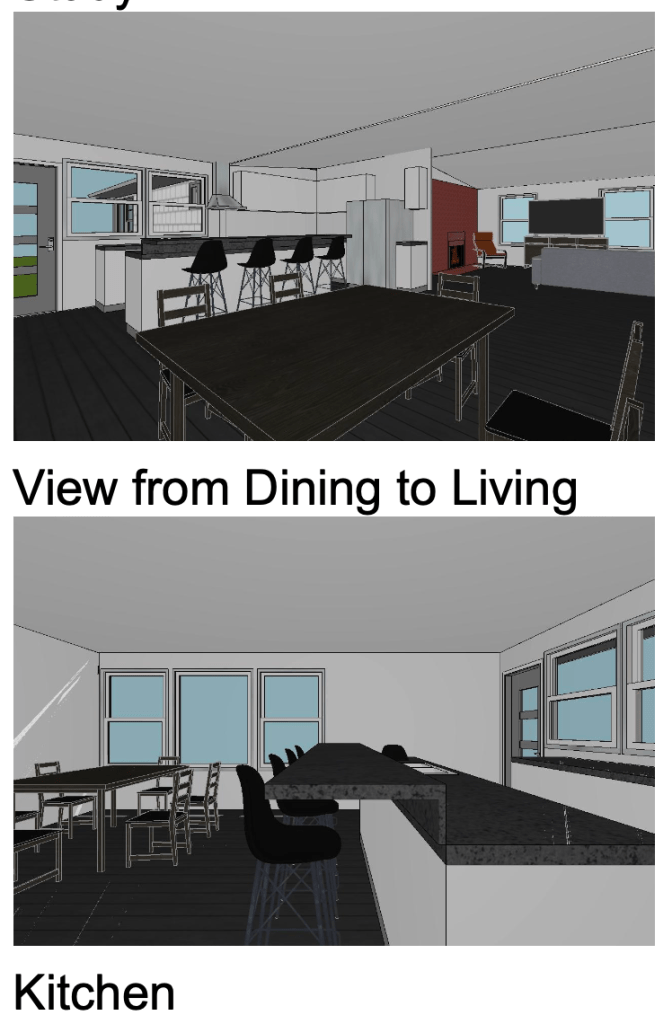
It’s tempting to pinch pennies, but you don’t want to save a little now only to regret it later. Simplifying your footprint, avoiding unnecessary corners or diagonal walls, and thoughtfully grouping plumbing can save money—but don’t let cost-cutting prevent you from designing a home that truly works for your family. Focus on the spaces and features that you’ll use and enjoy every day, and make sure the savings are meaningful, not just cosmetic.
Bottom Line
Having a sense of construction costs early in the process gives you clarity and confidence. By understanding the factors that influence costs and setting realistic ballpark numbers, you’ll be able to make informed decisions for your Forever Home. The result? A home that’s beautiful, functional, and built to last—without surprises along the way.
Ready to start planning your Forever Home? Whether you’re thinking about a remodel or an addition, understanding your budget early makes all the difference. Visit ForeverHomeArchitect.com to schedule a consultation and take the first step toward a home that’s beautiful, functional, and built to last.
 Design Lines