
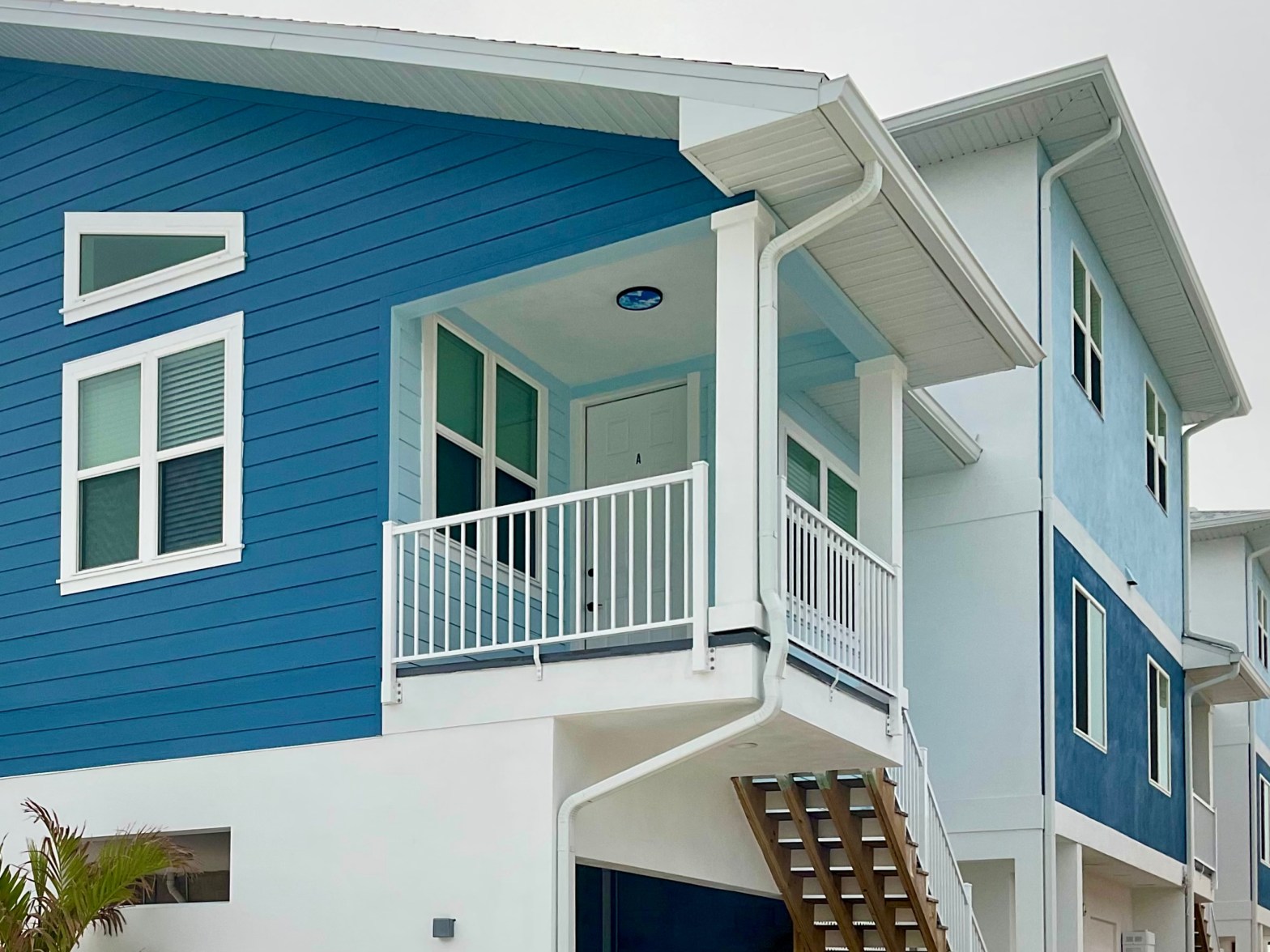
In my previous blog, Modern Meets Vernacular: Building Better Florida Homes, I wrote briefly about Tropical Modern Architecture. Now, I’d like to expand on that idea.
“Architects working in Tropical Modern design have built on many of the same principles found in Florida’s historic vernacular homes: careful attention to sun and shade, cross-ventilation, indoor-outdoor connections, and human-scaled spaces. While the forms and materials may be contemporary, the underlying logic — designing for climate, comfort, and lifestyle — remains the same. By learning from these traditions, both historic and modern, we can create homes that are resilient, comfortable, and deeply connected to their environment.”
A Style That Never Really Went Out of Style
Regardless of what’s trendy this year or next — Beachy, Farmhouse, or other interior design styles applied to architecture — Tropical Modern design is rooted in enduring principles. It’s not about surface aesthetics; it’s about responding to place.
Here in Florida, that means designing for hot, rainy, muggy summers with salt in the air, hurricane winds and rising floodwaters, and mosquito season. But it also means embracing the dry season — sunny days, low humidity, gentle breezes — when it’s time to open every door and window and live both indoors and out.
Tropical Modern homes use many of the same ideas and even materials as our regional historic styles, but in cleaner, more contemporary ways — better suited to today’s products, construction methods, and lifestyles.
Regionalism Still Matters
Regionalism once defined architecture from place to place. And it still can.
Office buildings and apartment complexes don’t have to look identical from Tampa to Seattle, or Boston to Denver. They shouldn’t. Not in roof slopes, window sizes, materials, or even color palettes. Buildings should reflect their climate and culture — the way people actually live and the environments they live in.

Lessons from Charleston
After living in Charleston, South Carolina, for two years, I became much more aware of how true historic styles were crafted for their place and climate — and how different they are from the faux versions that appeared in mid-century suburbs.
I especially noticed real, functioning shutters. In Charleston, shutters aren’t just decorative; they work. Small hooks keep them open, and many have louvers to allow breezes while shading from the sun. Shutters aren’t limited to windows — they often appear on doors, French doors, and even porches to block glare, allow airflow, and create privacy.
At the same time, I saw the constant maintenance these wood-framed homes require in a hot, salty environment. I appreciate their fine detailing, but I prefer a cleaner, more low-maintenance aesthetic.
Why Tropical Modern Feels Right
Florida’s climate helps explain why Tropical Modern makes sense here. According to the Koppen Climate Classification, most of the Southeastern United States, including much of Florida, falls into the Humid Subtropical zone: mild winters, daily summer thunderstorms, and high humidity. This same climate exists in parts of southern China, southern Japan, eastern Australia, and large areas of South America.
The southernmost parts of Florida — Miami and the Keys — are classified as Tropical Wet, with year-round warmth and more pronounced wet and dry seasons. Other places with this climate include the Caribbean, coastal Central America, and parts of Southeast Asia.
These regions share vernacular architecture strategies:
- Large roof overhangs to protect from rain and sun
- High ceilings to let warm air rise and cooler air circulate
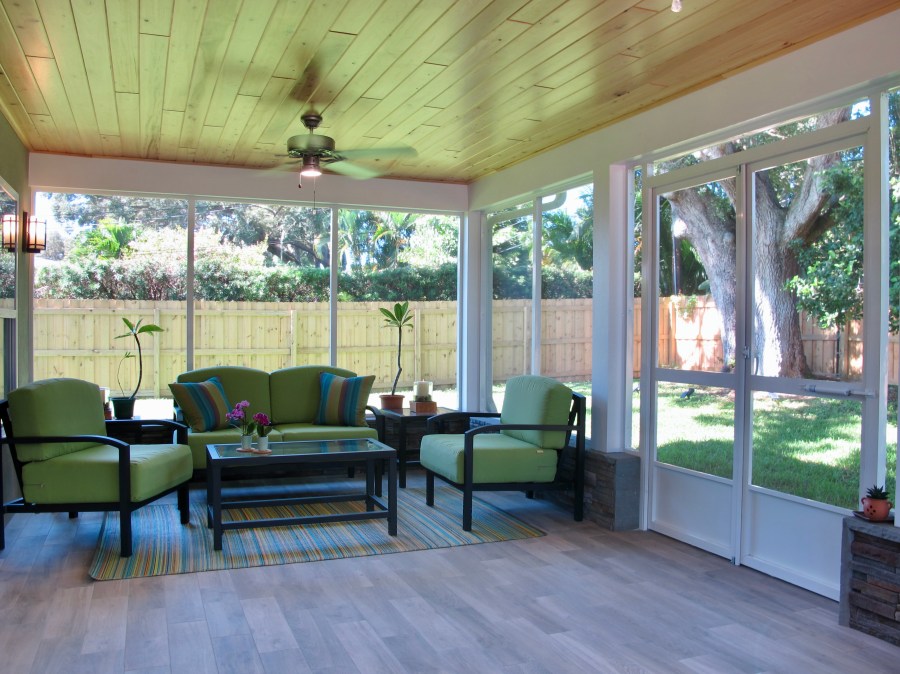
- Porches or verandahs as functional living spaces
- Elevated floors to stay above ground moisture and pests
- Large windows and doors to capture light and breezes
In contrast, Mediterranean-style architecture from dry climates often lacks screens or provisions for heavy rainfall, making it less suited to subtropical Florida. Tropical Modern homes adapt these lessons to our local weather, maximizing comfort and durability.
Learning from Vernacular Architecture
“While aesthetics and nostalgia play a part in contemporary vernacular design, architects are sensible enough to synthesize functional traditions that have successfully evolved over time, developing an architecture that responds to the climate and local topography and makes best use of local materials.”
— Tim Street-Porter, Tropical Houses: Living in Nature in Jamaica, Sri Lanka, Java, Bali, and the Coasts of Mexico and Belize
In other words, in design we don’t have to start from scratch or reinvent the wheel. But we also don’t need to simply imitate the past. The most meaningful architecture builds on the wisdom of time-tested traditions — understanding why they worked for their place and climate — and evolves them for today’s materials, technologies, and ways of living.
Florida’s Own Tropical Modern Movement
We actually have examples of Tropical Modern architecture right here in Florida — though many people, even architects, aren’t fully aware of it.
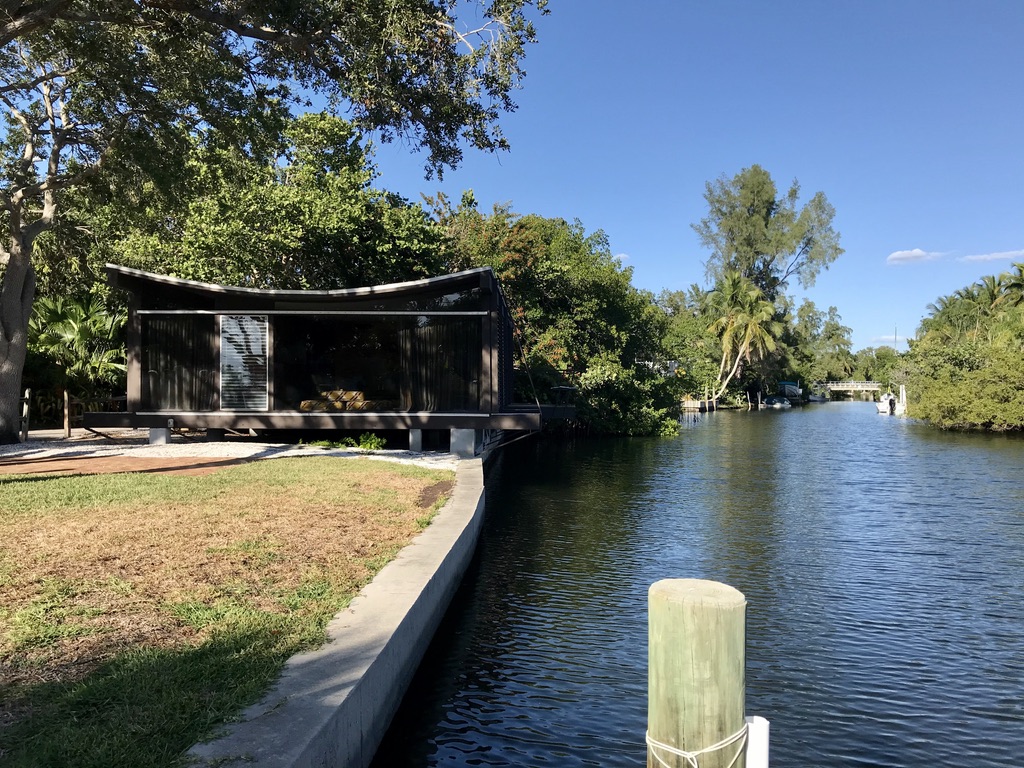
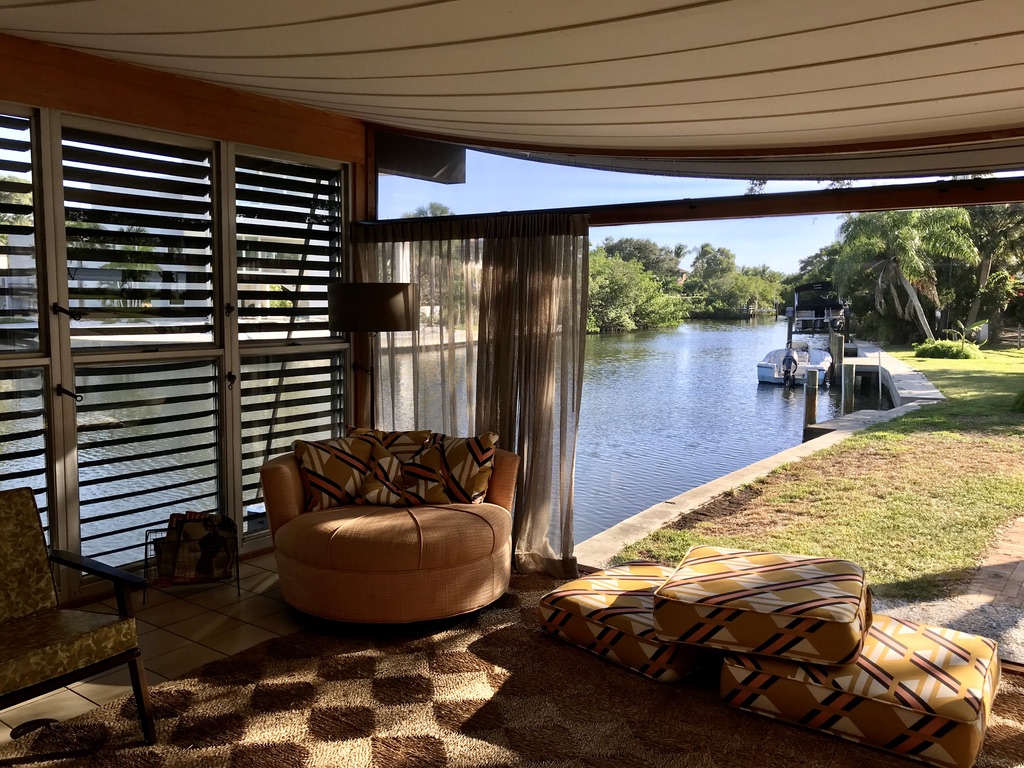
In the 1940s and 1950s, a group of architects began experimenting with new ideas about how homes could respond to Florida’s environment. Working mainly around Sarasota, they designed vacation houses for clients drawn to the Gulf Coast’s light, breezes, and water views. These homes were part of what later became known as the Sarasota School of Architecture.
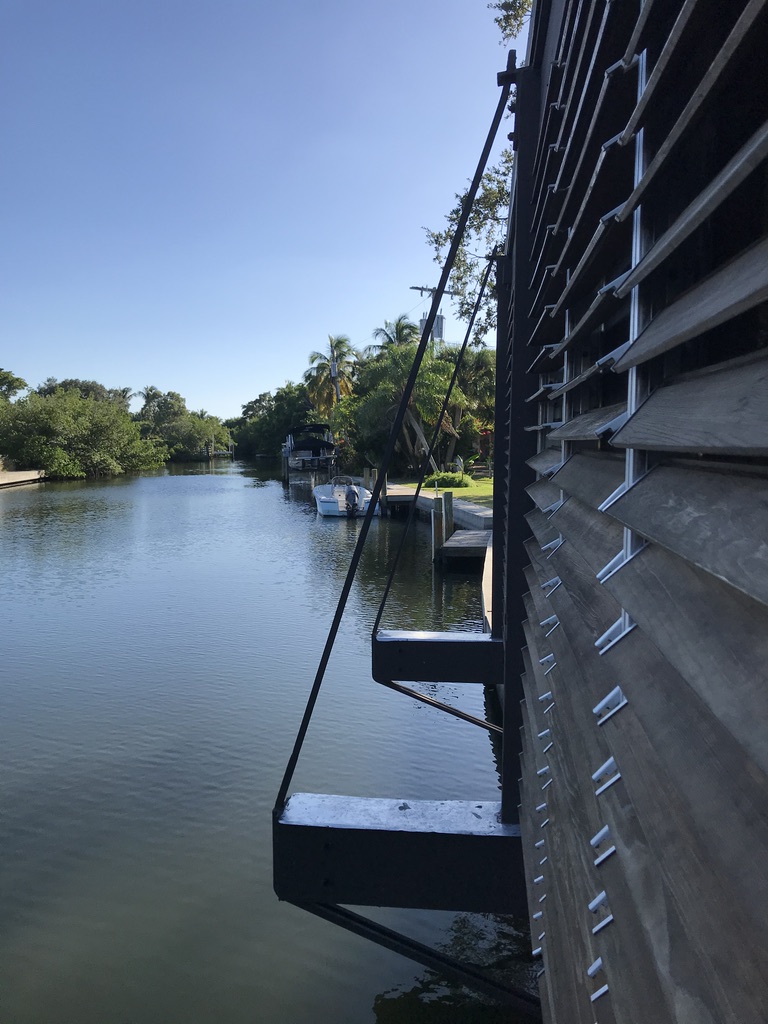
They used innovative (for the time) materials such as plywood and Ocala block, opening up walls with floor-to-ceiling glass and sliding doors to connect indoors and out. Large roof overhangs shielded homes from sun and rain, and local cypress was used for beams and paneling — a material that naturally resists Florida’s sun and moisture with minimal maintenance.
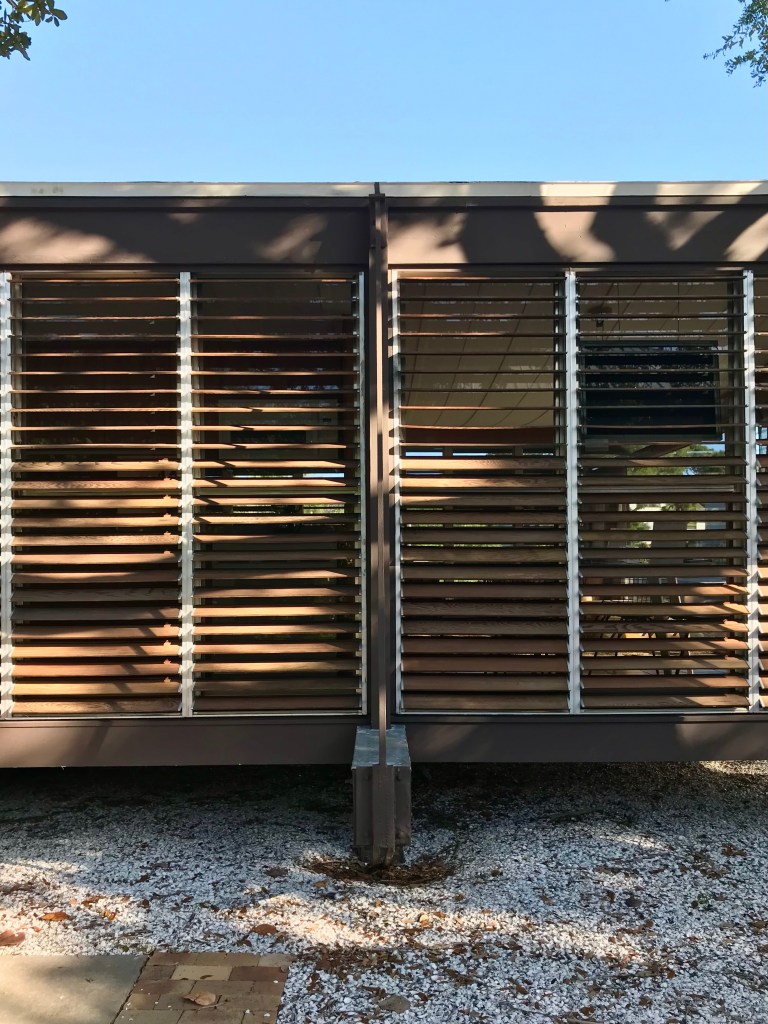
Concrete and block made from Florida’s sand and limestone were celebrated for their durability and simplicity. Because most homes didn’t yet have air conditioning, designers relied on cross-ventilation, Ocala block screens, and jalousie windows (adjustable glass louvers) to let in breezes while keeping out rain. Adjustable awnings and shade panels became both functional and playful design elements.
These homes were modern, but they were also deeply regional — Florida’s own expression of Tropical Modernism.
Parallel Ideas Around the World
At the same time, in Brazil, architects were exploring similar ideas on a much larger scale. Oscar Niemeyer, one of the masters of modern architecture, designed many of the original buildings in Brasília, the newly founded capital. His monumental concrete forms were designed for natural light, shade, and ventilation — shaped by sun angles and breezes.
While Niemeyer’s work was civic and grand rather than residential, his architecture shared the same DNA as Florida’s Tropical Modern: design rooted in climate, material, and place.
Echoes in Key West
You can also see traces of these ideas in Key West-style architecture, which many Floridians naturally gravitate toward. Although not truly Tropical Modern, Key West homes have a similar human scale and respond well to the climate — with wraparound verandahs, operable shutters, elevated floors, and high ceilings that invite cross-ventilation.
The difference lies in expression: Key West style leans traditional and decorative, while Tropical Modern distills those same principles into cleaner lines and contemporary materials. Both, however, are authentically Floridian.
Why Tropical Modern Matters Today
Hurricanes, flooding, and hot, humid summers aren’t going away — so it’s time to design homes that respond to these realities. Gone are the mid-century beach homes built at ground level; they didn’t reflect what living near the water truly entails, then or now. Modern homes should be elevated above floodwaters, allowing better views and parking below, and provide sheltered outdoor spaces — porches or lanais instead of just patios — to give protection from the sun, afternoon storms, and insects.
We also know more about insulation and energy efficiency today. Older seasonal homes often had little to none, but modern design allows us to control heat, humidity, and comfort while keeping energy use reasonable. Air conditioning is standard, but thoughtful design — cross ventilation, shading, ceiling fans, and proper window placement — can reduce energy demand and keep utility bills lower.
Practical strategies for comfort and livability include:
- High ceilings with ceiling fans in entertaining areas (kitchen, dining, living, family rooms) and bedrooms for airflow and comfort
- Windows on multiple sides of a room to maximize natural light, views, and cross ventilation
- Porches or lanais on the west side for sunset viewing while shielding the interior from the hot afternoon sun
- Raised concrete slabs instead of crawl spaces to reduce critter intrusion and moisture, while simplifying insulation and ventilation
- Durable, low-maintenance materials: concrete and concrete block with stucco or siding, composite materials that resemble wood, or decay-resistant woods like cypress for outdoor elements
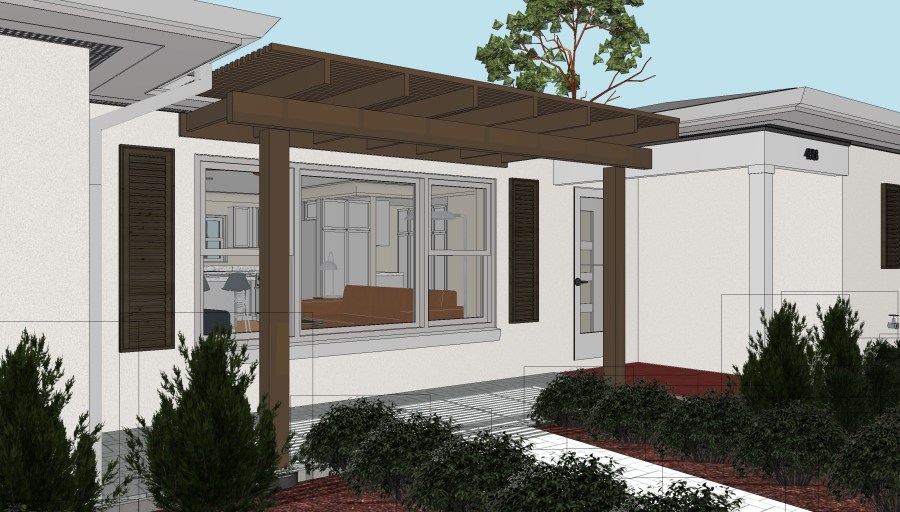
- Shading devices: louvered shutters, pergolas, brise-soleils, or wide roof overhangs (3–4 feet) to block glare and protect walls
- Window types tailored to climate: awning or casement windows for light rain, double-hung or operable windows for ceiling-level airflow
Tropical Modern homes are designed for seasonal flexibility. In the dry season, cross ventilation opens the house and connects occupants to nature. In cooler months, interiors remain cozy while still allowing sunshine to warm spaces naturally. The goal is comfortable living inside and outside year-round, with homes that feel open, airy, and intimately connected to their surroundings.
Looking Ahead
Tropical Modern isn’t about replicating historic styles or copying architecture from other regions. It’s about honoring what works — the logic, not just the look — and adapting it for how we live today.
When design begins with climate, everything else follows naturally: comfort, resilience, sustainability, beauty, and a deep sense of belonging. That’s the promise of Tropical Modern architecture — homes that feel right for their place, their people, and the world we live in.
 Design Lines