
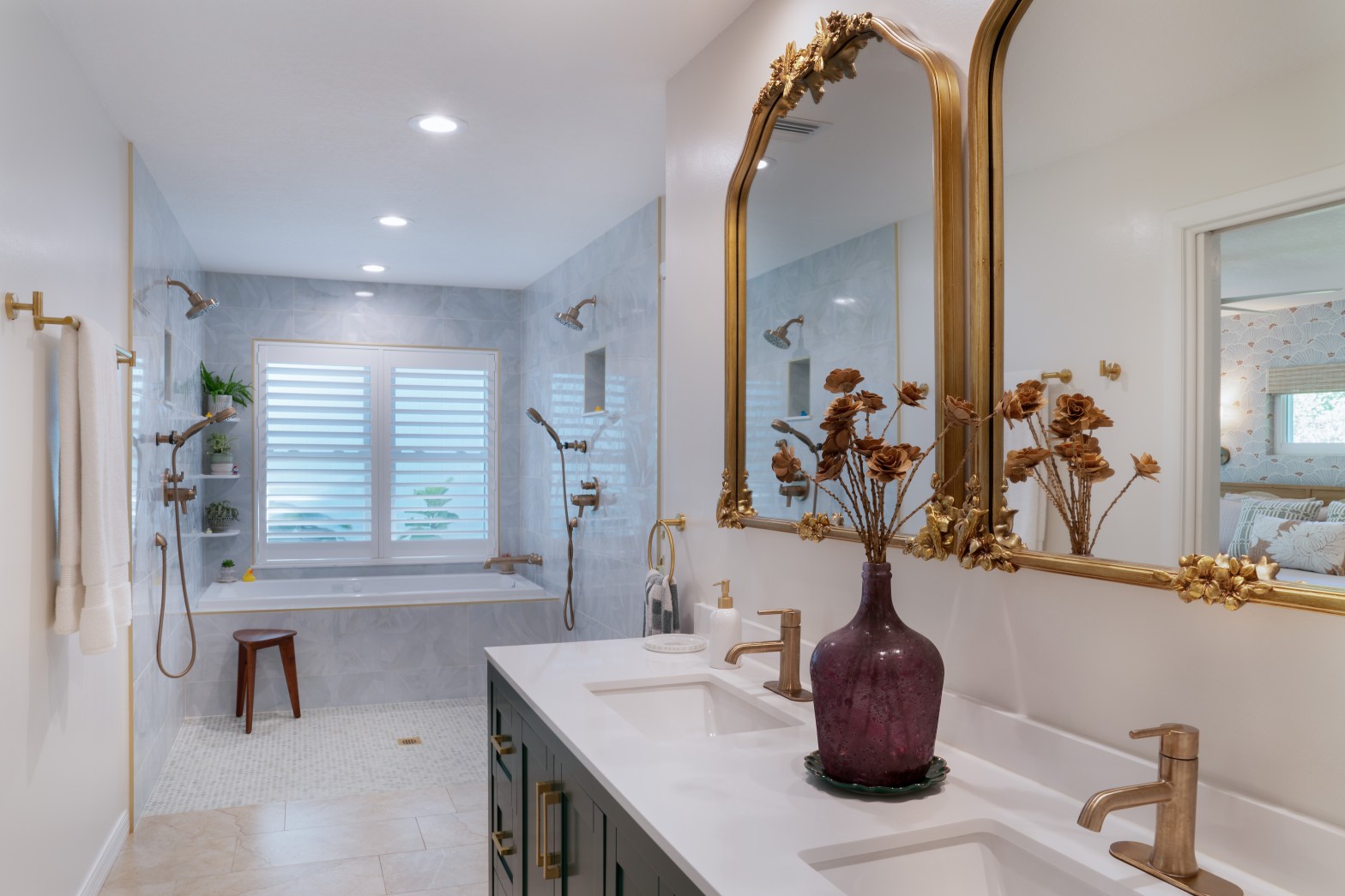
I was recently at a party when someone asked me, “Do I need an architect for my bathroom remodel?” A few minutes later, someone else had the same question about a kitchen remodel. My answer to both? Maybe.
For small projects, like updating finishes or replacing fixtures, a contractor or interior designer may be all you need. But the moment a project involves large changes—moving walls, adding square footage, or reconfiguring plumbing and electrical systems—it’s time to bring in an architect.
How It Works in Commercial Projects
In commercial buildings—think offices, hotels, and retail spaces—the roles are usually more defined. Building codes dictate which professionals are required, and a whole team of specialists comes together to make the project happen.
An Architect leads the process, starting with the Pre-design Phase: zoning regulations, setbacks, flood requirements, and, of course, what the client wants and needs. Then, as the design develops, consultants are brought in to handle specific technical aspects.
- A structural engineer ensures the building can stand up to gravity, wind, and flooding.
- A civil engineer deals with the land itself—making sure stormwater drains properly and that parking lots or driveways are designed correctly.
- Meanwhile, a mechanical engineer focuses on heating, cooling, and ventilation, an electrical engineer calculates power needs for everything from lighting to major equipment, and a plumbing engineer makes sure water flows efficiently in and out of the building.
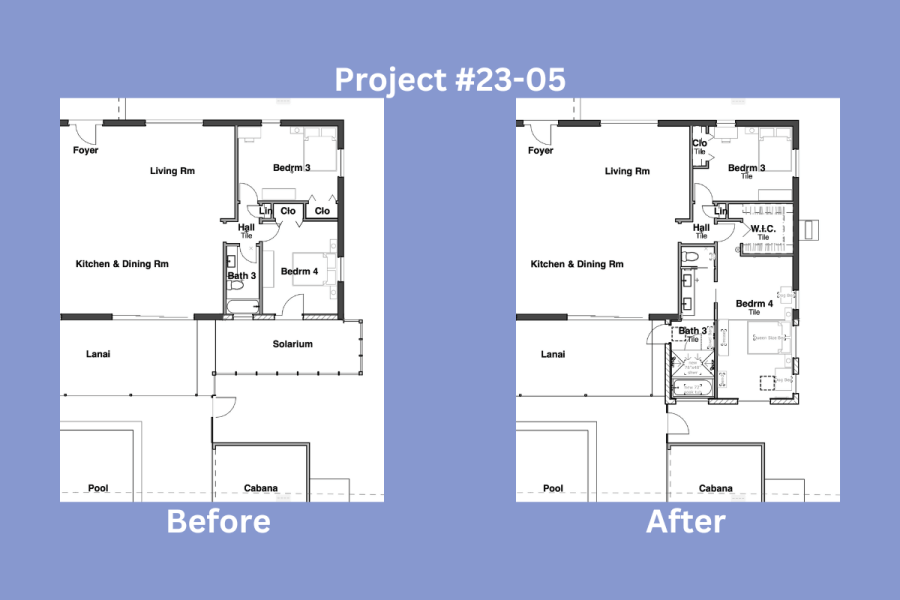
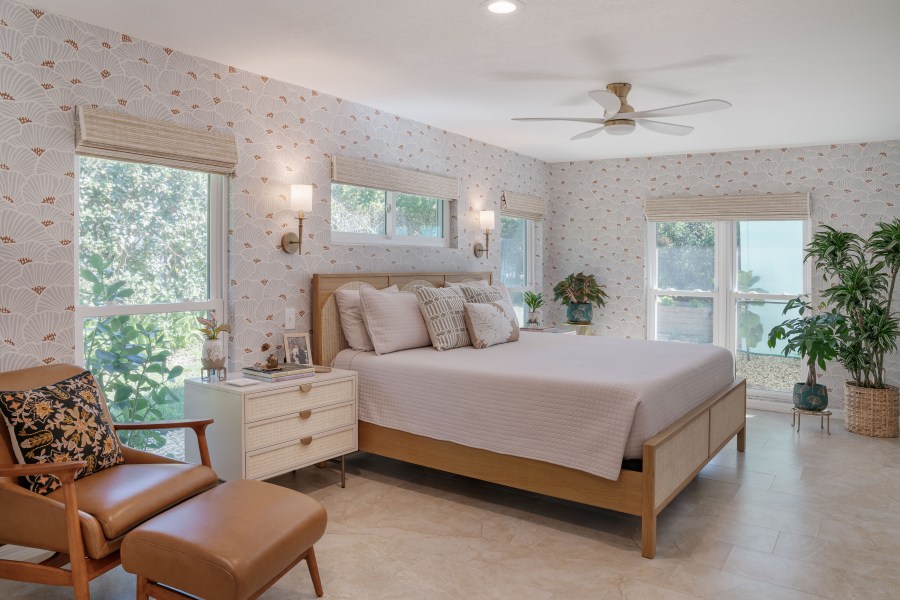
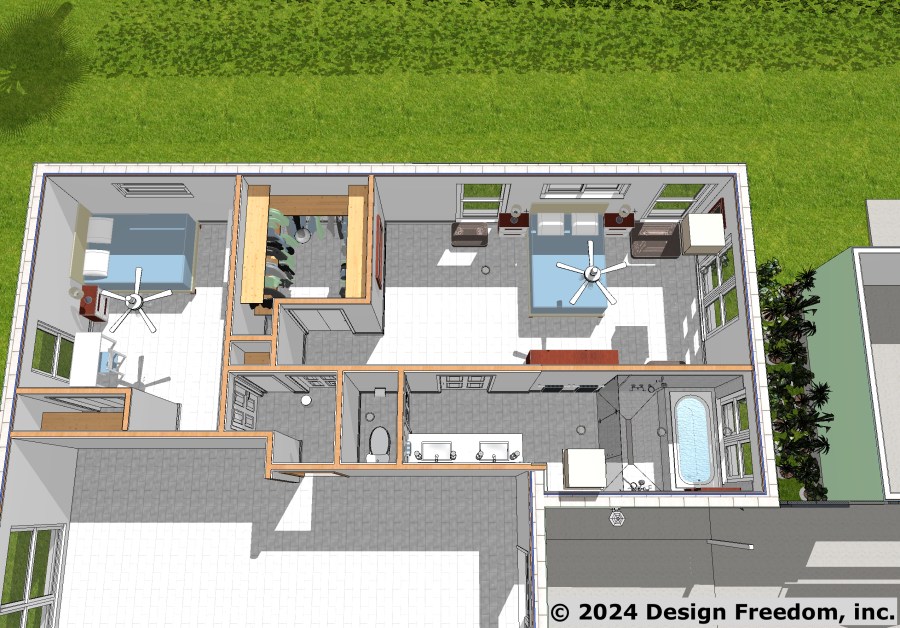
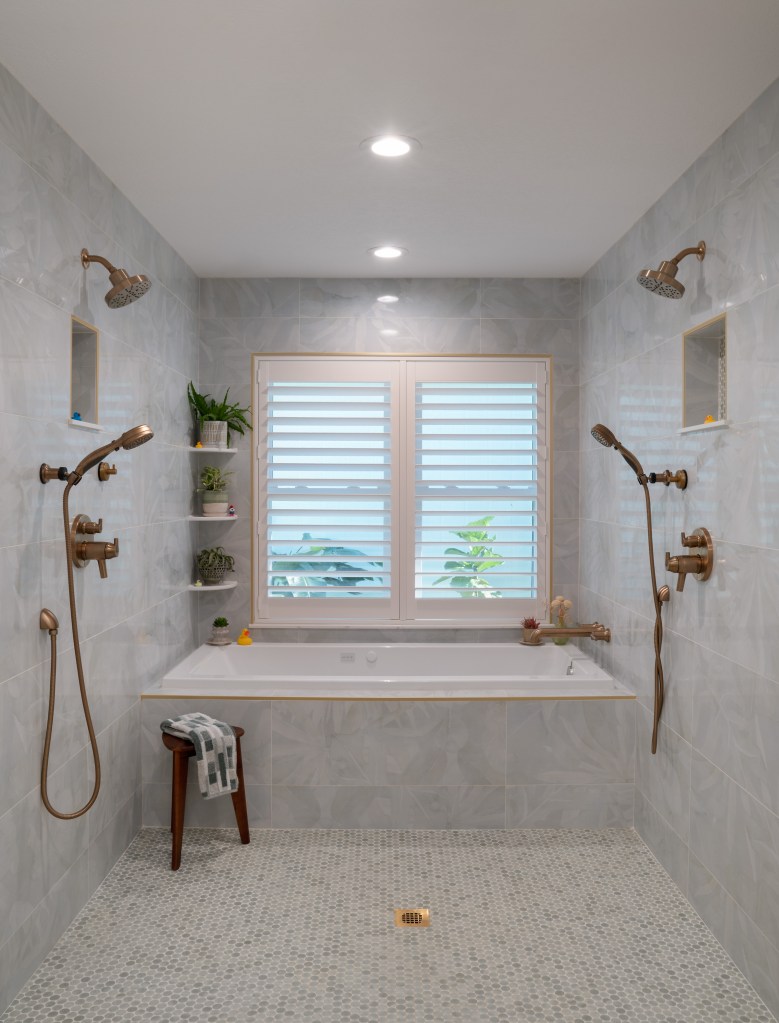
with interior remodeling to create the Spa Retreat bathroom and bedroom.
What About Residential Projects?
For a single-family home, the architect often takes on many of these roles. We design the structure, plan how the home functions, and balance aesthetics with practicality. But depending on the complexity of the project, we might also bring in consultants to make sure everything is designed to the highest standard.
For example, if a home is in a flood zone, a geotechnical engineer may be needed to test the soil and recommend the best foundation type for the structural engineer to design. Many parts of Florida, especially on barrier islands, have land that’s been built up over time, sometimes on unstable fill or old seagrass beds. Knowing what’s under the surface can prevent costly surprises later.
A surveyor is also essential for most additions and new builds. They provide a detailed site plan, and in flood zones, an Elevation Certificate, which helps determine how high the home needs to be built.
Some structural systems also require additional expertise. If a home is being built with all concrete, all steel, or SCIPs (Structural Concrete Insulated Panels), a structural engineer is brought in to ensure the design meets engineering standards.
Specialists for the Details
Inside the home, design choices become just as important as structural ones. This is where a kitchen and bath designer can be invaluable. They know the latest in cabinetry, appliances, and layout efficiencies—things that can make a space both beautiful and functional. Some architects handle this design work, while others collaborate with specialists who focus solely on kitchens and bathrooms.
Then there’s the interior designer, who helps select finishes—tile, lighting, paint colors, even furniture. In commercial spaces, interior designers also consider things like fire-resistant materials, ADA accessibility, and how the layout affects foot traffic. In residential projects, the homeowner, architect, or interior designer might make these selections, depending on the level of customization.
And let’s not forget the outdoor space. A landscape architect or designer can transform a backyard into a seamless extension of the home, making sure plant selections work for the local climate and that stormwater is properly managed—an especially important consideration in Florida.
We also use pool designers in Florida. While the architect may help locate the pool and approximate its size, ensuring it integrates well with the home’s interior spaces and the patio or lanai, the pool designer focuses on designing the pool itself—its shape, depth, features, and water systems.
For homeowners looking to maximize energy efficiency, an energy consultant or home energy rater can assess insulation, window performance, and HVAC systems to help lower energy costs and create a more sustainable home. They can also help explore options like geothermal heating or solar panels, weighing the upfront investment against long-term energy savings.
Why Some Projects Require More Experts
Every project is different. Some architects prefer to handle as much of the design as possible, while others bring in a network of specialists to focus on certain aspects. The decision often comes down to:
- The project’s complexity—Is it a simple remodel or a multi-level addition?
- Local regulations—Does the project require a structural or civil engineer?
- The homeowner’s goals—Are energy efficiency, luxury finishes, or landscape design a priority?
At Design Freedom, inc., we tailor our approach to fit the project. Some homeowners want a streamlined process, while others benefit from a full team of specialists. Either way, our goal is to make the design process smooth, enjoyable, and stress-free.
So, Do You Need an Architect?
To circle back to those two questions I got at the party: if you’re making significant changes to your home—whether it’s a bathroom remodel or something larger—an Architect can help by designing spaces that are both functional and beautiful, and ensuring everything meets code. But, if your project is small and doesn’t require major changes, you might be able to work directly with a designer or contractor.
For those bigger projects, the expertise an Architect provides can save you time, stress, and money. They manage the process and coordinate the team of professionals needed for your project. If you’re still unsure whether you need an Architect, let’s talk! Whether your project is big or small, we’re happy to discuss your goals and help you figure out the best approach.
Visit ForeverHomeArchitect.com to schedule a consultation.
*Photography by RiMo Photo, LLC*
 Design Lines