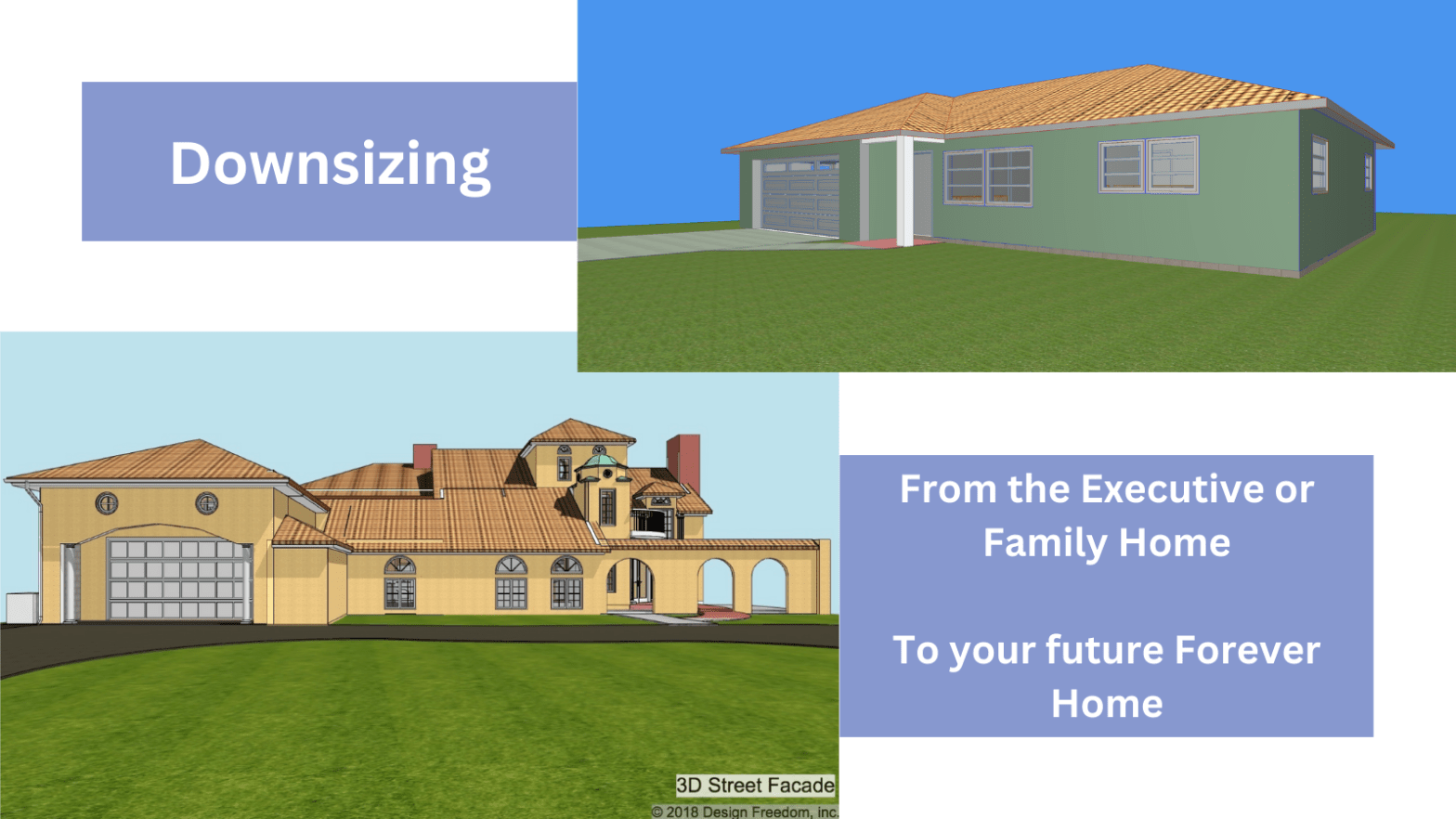
Sometimes a smaller home that’s thoughtfully designed can meet your needs better than a large, sprawling family home. A right-sized home in a great location might often have a layout that doesn’t quite fit modern living. Many suburban houses were built from generic plans without considering views or sunlight. A well-designed house or remodel can offer tremendous value.
Downsizing: A New Perspective
Many of our clients have raised their families in large homes with multiple bedrooms and various indoor gathering spaces like living rooms, family rooms, media rooms, and rec rooms. The noise of a busy household makes it necessary to space rooms out for privacy and quiet. Despite the square footage, space often feels at a premium, with some rooms rarely used for their intended purposes—like a dining room that doubles as a home office except for holidays and birthdays.
Even if you didn’t have a bustling household, you might have lived in a bigger house simply because it was in a good location, near work, and preferable to apartment living.
In the late 1990s, architect Sarah Susanka started exploring the idea of quality over quantity with her clients. She wrote a book called The Not So Big House, filled with inspiring photos and insights. She continues to publish books highlighting the joys of living in a well-designed smaller home. She even hosts a Design Professionals Directory, in which we are listed.
“It’s time for a different kind of house. A house that is more than square footage; a house that is Not So Big, where each room is used every day. A house with a floorplan inspired by our informal lifestyle instead of the way our grandparents lived. A house for the future that embraces a few well-worn concepts from the past. A house that expresses our values and our persoanlities. It’s time for the Not So Big House.”
Sarah susanka, the not so big house: a blueprint for the way we really live, 1998
Understanding The Local Market
In the past five years, the median house size sold in Pinellas County, FL, is about 1,400 square feet. Most homes we work on were built between the 1950s and 1980s, falling within this size range, excluding garages. Typically, these are one-story concrete block homes with two to three bedrooms, one to two bathrooms, a front living room, smaller kitchens, and dining rooms, and possibly a patio or screened lanai in the back.
For those living without children, the number of rooms can work out. One bedroom can be a guest room, another a home office. However, the owner’s bedroom often feels cramped for a king-sized bed, closets are insufficient, and the owner’s bathroom is usually too small for comfort. Kitchens are often isolated from living and dining rooms and the backyard. Even removing walls can lead to unworkable furniture layouts. And let’s not forget the laundry, typically placed as far as possible from where you actually use your clothes and bed linens.
While 1,400 square feet can be enough, the layout and room sizes often need improvement.
Quality Over Quantity
Resist the initial urge to add more rooms. You could end up with spaces you don’t need or use, still requiring cleaning and air conditioning. Prioritize quality over quantity by assessing what you truly need and want, while considering the house and property’s limitations.
Adding a second floor for a new owner’s suite might seem appealing, but do you really want to climb stairs for the next decade? Would you prefer it on the main floor, with windows or French doors opening to your garden or pool area? Expanding into other bedrooms or building an addition are options, depending on your home and property.
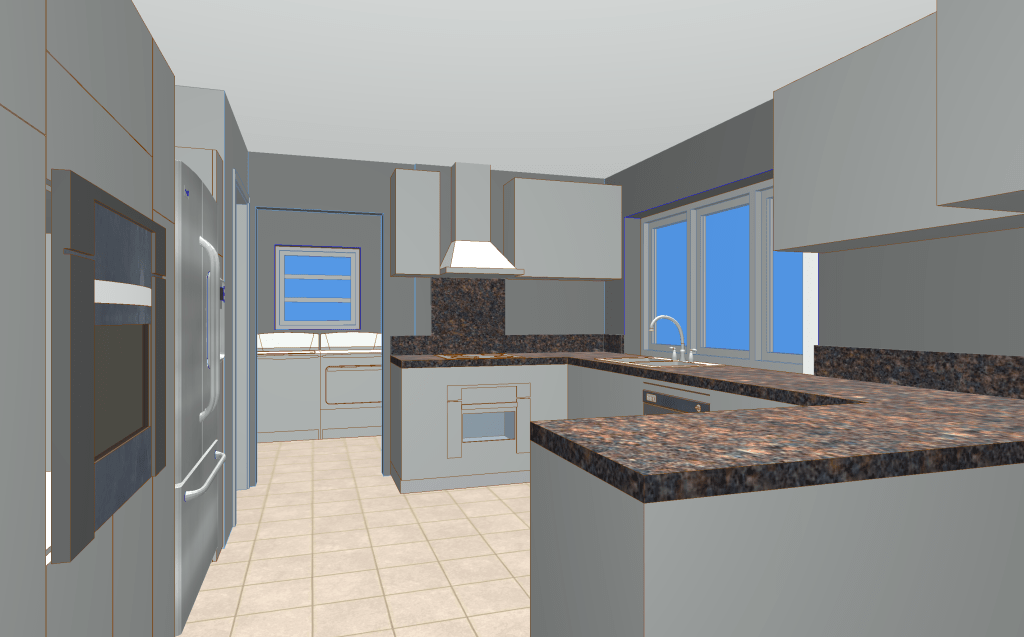
New layout in Kitchen with larger window over the sink and the wall ovens, refrigerator, and pantry together on one wall.
An Example Project
Our clients approached us with the following goals for their home renovation:
Improved layout and increased storage
New master bedroom suite (including bedroom, bathroom with double sinks and shower, and walk-in closets)
Expanded kitchen with garden views and access
Outdoor grill and covered seating area
Potential in-law suite
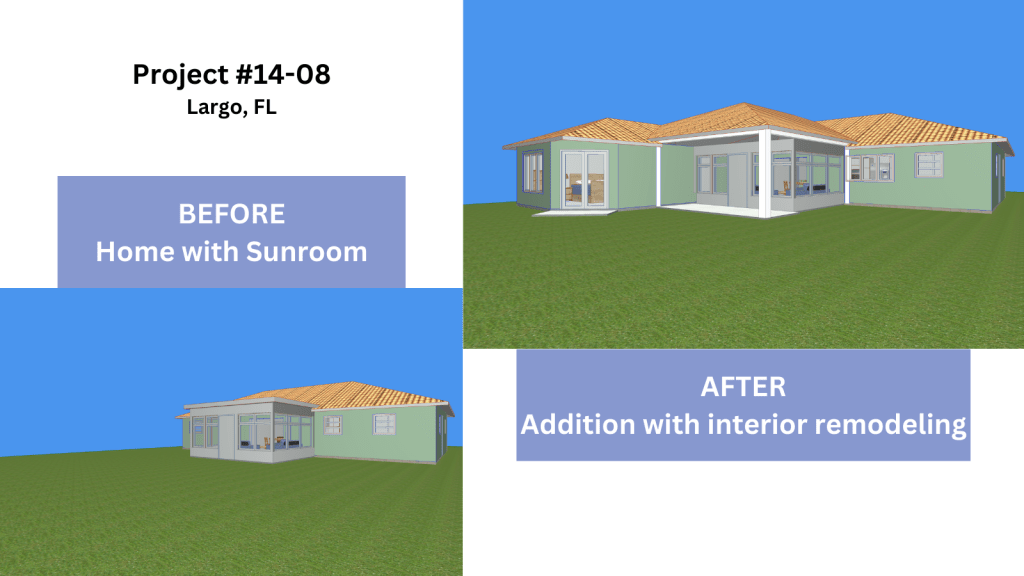
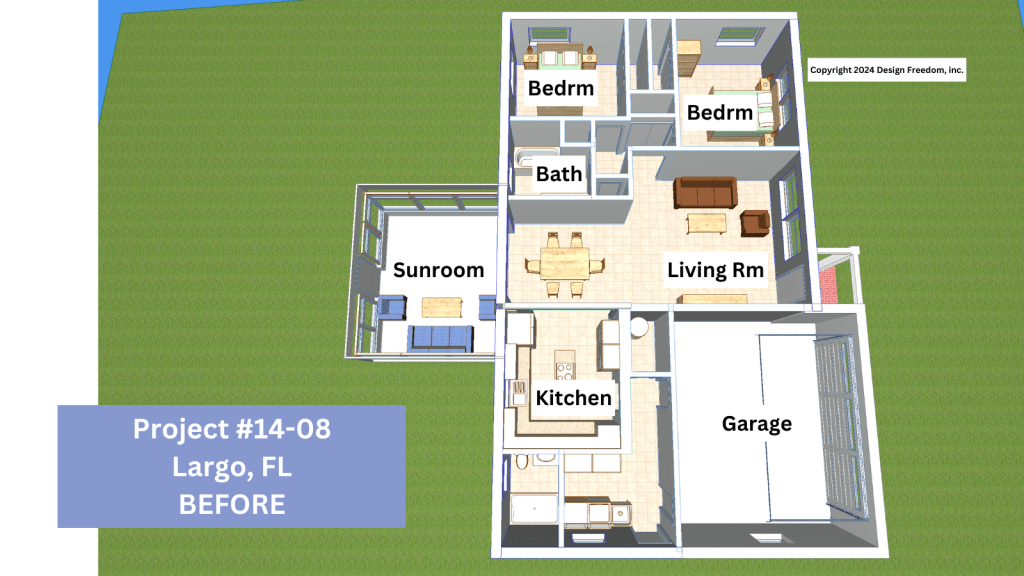
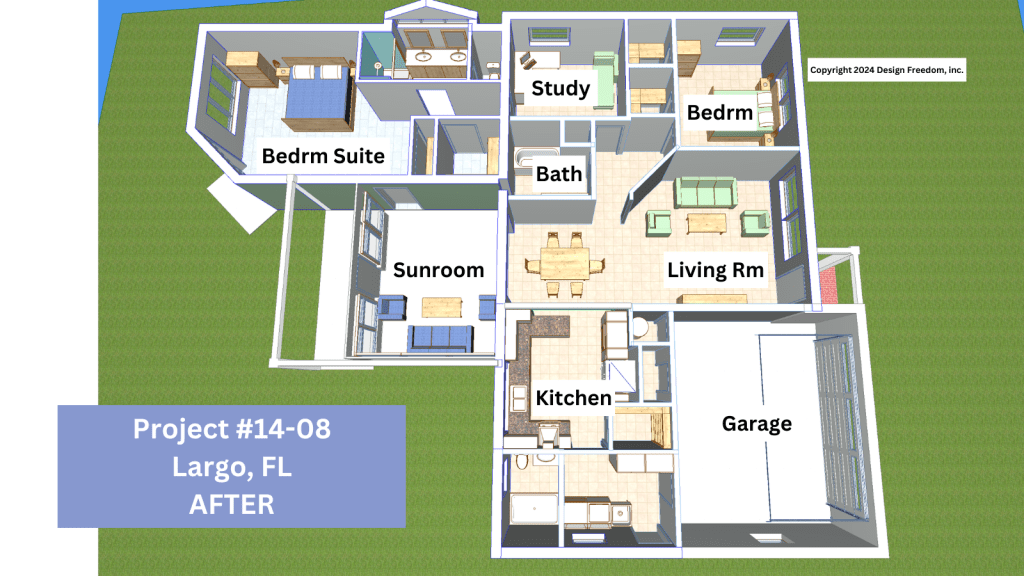
The original house was a 2-bedroom, 2-bathroom home with an attached garage. The living and dining rooms were open to each other, and there was a sunroom addition at the rear, providing access to the backyard. The kitchen had an awkward layout, with a second bathroom and laundry area located behind it.
Design Solutions
One of our initial design schemes included adding the new master bedroom suite to the back of the house, offering garden views and access from the sunroom. This addition featured a larger bathroom and two separate closets. The front bedroom was converted into a guest room, while the other was transformed into a study. These two rooms, and the original bathroom, could serve as a temporary seasonal suite for guests.
We reconfigured the kitchen by relocating the refrigerator and wall ovens to a single wall and enlarging the window over the sink. We also converted some hallway space into a large pantry. The laundry area and second bathroom remained mostly unchanged.
Project Outcome
The remodel increased the house size from 1,496 square feet to 2,015 square feet (plus the garage). This transformation addressed the home’s previous issues while preserving its functional elements.
Practical Considerations
When downsizing or remodeling to create your forever home, keep these points in mind:
Flow and Functionality: Ensure a logical flow between spaces. Open up the kitchen to the living and dining areas to create a sense of space and connectivity. Make sure there is a logical flow from room to room, enhancing daily convenience.
Multipurpose Rooms: Design rooms that can serve multiple functions. A guest room can double as a home office or hobby room, while a dining room can also be a study area or a playroom for grandchildren.
Outdoor Space: Integrate outdoor spaces with your indoor living areas. A patio or deck can extend your living space, offering a place to relax, entertain, and enjoy nature.
Storage Solutions: Invest in smart storage solutions. Built-in cabinets, shelves, and closets can help maximize space and keep your home organized and clutter-free.
Accessibility: Plan for the future by incorporating accessibility features. Wider doorways, walk-in showers, and non-slip flooring can make your home safer and more comfortable as you age.
Energy Efficiency: Upgrade to energy-efficient appliances, windows, and insulation. A smaller, well-designed home can be easier and cheaper to heat and cool, reducing your utility bills and environmental footprint.
Final Thoughts
Your forever home should be a place where you feel comfortable, safe, and happy. It doesn’t have to be large; it just needs to be well-designed to meet your needs. Focus on quality over quantity, and you’ll find that a smaller home can provide a big life.
By carefully considering your current and future needs and working with a skilled architect or designer, you can create a home that is not only beautiful but also functional and efficient. Remember, it’s not about the house size but how well it serves you and enhances your lifestyle.

 Design Lines