
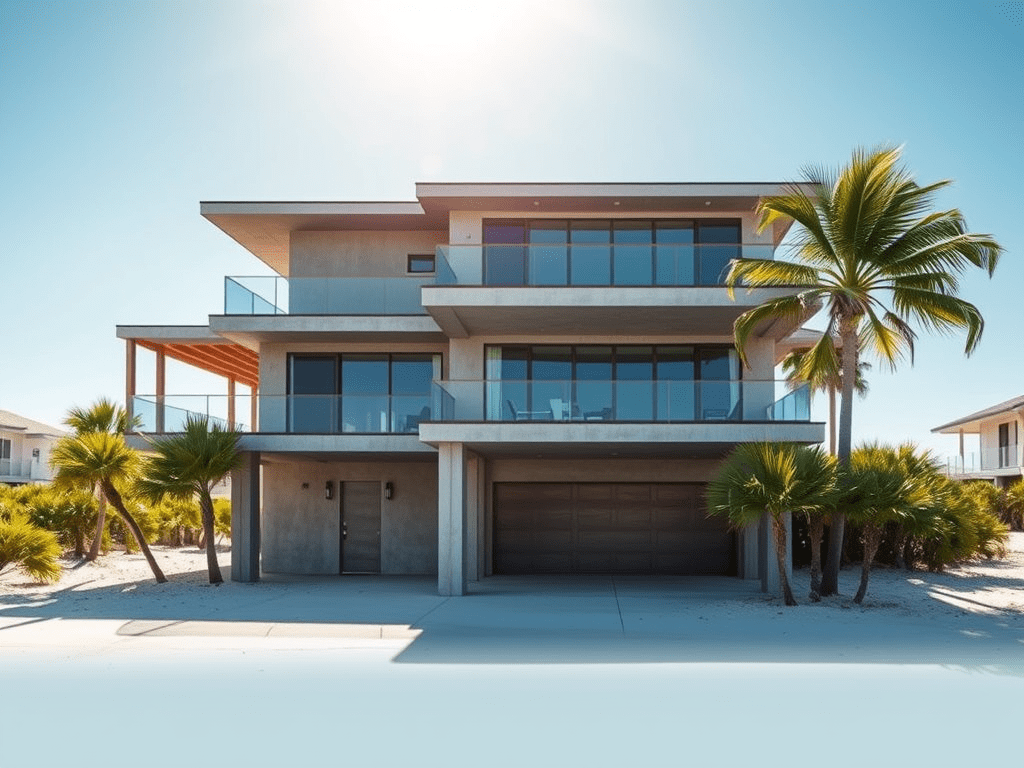
Why Build Beyond Code? Because Resilience Shouldn’t Wait for Help.
In Florida, we live with the reality of hurricanes, storm surge, floods, tornadoes, and even wildfires that seem to strike without warning. So why are we still designing to just meet the minimum?
The truth is, code minimum isn’t enough. It’s the bare baseline of safety—not a promise of durability. Not a plan for your future. And certainly not a path to peace of mind.
Resilient design means more than just surviving.
It means knowing that after the next major storm, you’ll come back to your home, not to rebuild—but to resume life.
What Does Resilient Design Really Mean?
It means only needing to pick up toys from the yard and bring in the patio cushions before a hurricane.
It means coming home after one night away to a house that’s still standing strong—with power, A/C, and a dry garage because your mechanicals were raised above flood level and your backup power kicked in.
It means groceries still cold in the fridge, a roof still intact, and no hidden water damage creeping up your walls or under your floors.
Resilience isn’t just about surviving the storm—it’s about thriving after it. That’s what we design for. Not just the “bare minimum” requirements but a home that serves your family for years to come, no matter the weather.
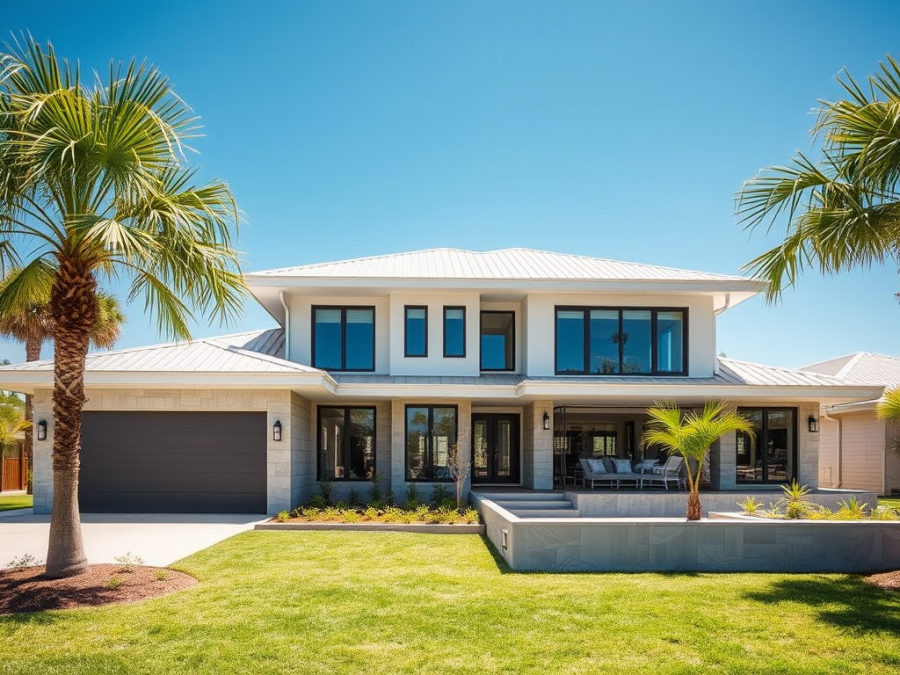
2-story modern home in a tropical landscaped yard with large windows and stucco or stone walls
Design the Structure for Strength
- Concrete, concrete block, and terrazzo—they don’t rot, swell, or crumble when wet. They clean up easily after a flood and require little maintenance.
- No wood or MDF near the ground—and minimal wood in the structure. We recommend using wood for beauty, not load-bearing. Consider it for upper-level flooring or interior cabinets—not in flood zones or anywhere termites might find it tasty.
- SCIPs (Structural Concrete Insulated Panels) are another excellent option for strong, well-insulated walls that resist water and wind—and can be installed quickly with the right crew. SCIPs provide the durability, energy efficiency, and storm protection that Florida homes need. Similar to SIPs (Structural Insulated Panels), SCIPs include concrete on both sides of an insulating core instead of plywood or metal skins.
Living in Florida means dealing with heat, humidity, and unpredictable storms. We recommend designing your home to handle it all. Keep it cool, cut down on energy costs, and add an extra layer of protection during hurricane season. Building resiliently is a game-changer.
- Closed, unvented attics and soffits without perforations reduce the risk of wind or ember intrusion while maintaining protection for your walls and foundation.
- Concrete roofs might seem like an upgrade, but the long-term peace of mind (and lower insurance premiums) is worth every penny.
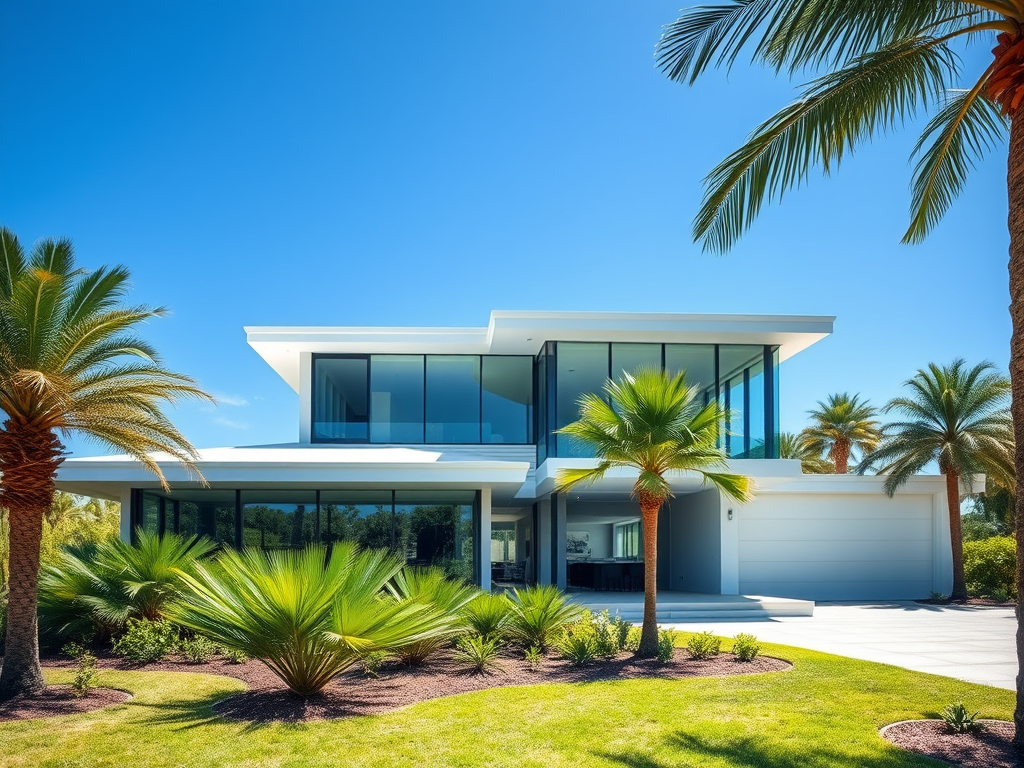
2-story modern home in a tropical landscaped yard with glazed walls and stucco or concrete walls
We’re Advocating for Change—One Client at a Time
While we haven’t yet designed a home that includes all of these resilient features, we’re working toward it. Many of our clients are already choosing to raise their homes above the required flood level, using fiber cement siding instead of vinyl, and considering concrete block walls instead of wood framing. We continue to educate and encourage everyone we work with to invest in future-ready design.
We believe your home should do more than look great—it should make your life easier, more comfortable, and safer, no matter what Mother Nature throws your way. When you think about what makes a home truly great:
- Lower energy bills with excellent insulation, keeping your home cool in the summer and warm in the winter without overworking your HVAC system.
- Disaster tough—built to handle hurricanes, floods, and even fires, protecting your family and your investment.
- Sustainable living—designed for energy efficiency, with features like solar panels, battery backups, and electric vehicle charging stations. These solutions help reduce energy consumption and support a greener future, all while keeping your home resilient.
- Low maintenance—forget about worries like termites or rotting walls. Withstand the test of time with minimal upkeep.
Ready to Build for the Long Term?
We help Florida homeowners design homes that are durable, efficient, low-maintenance—and beautiful. Let’s talk about how your next home can go beyond the minimums and reflect your long-term vision.
Visit ForeverHomeArchitect.com to schedule a consultation.
 Design Lines