
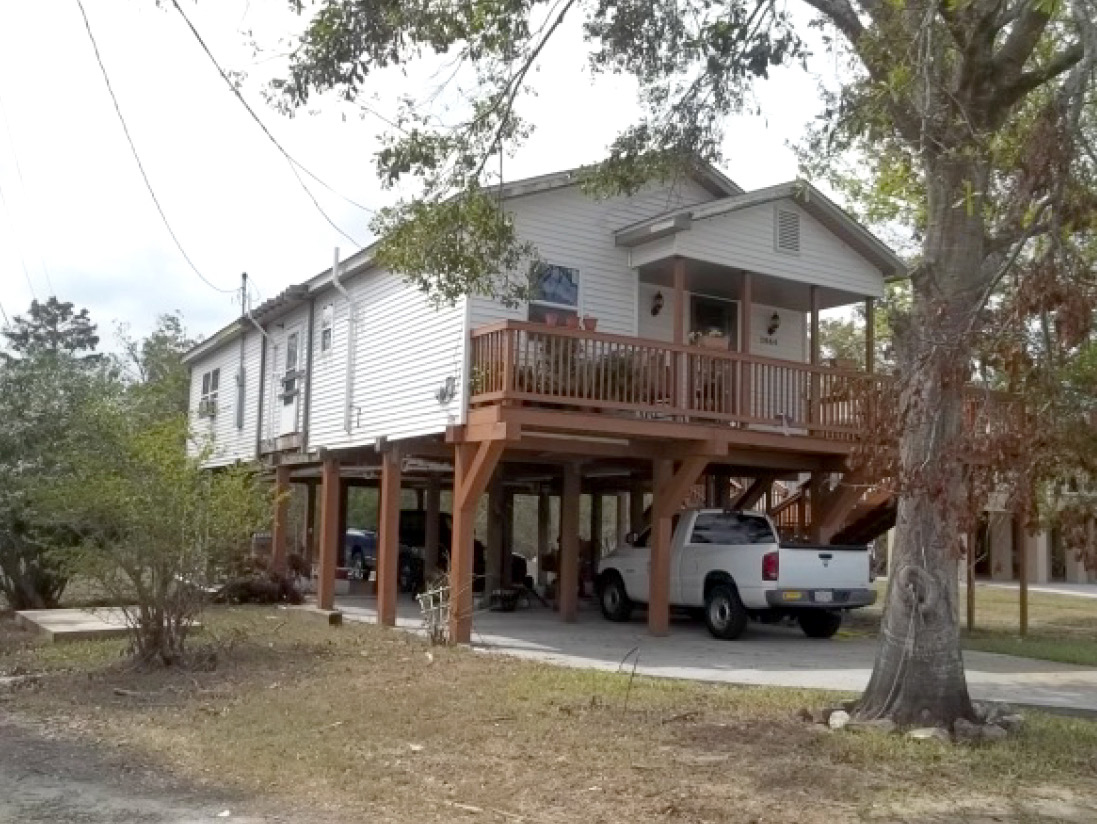
Living in a flood zone presents unique challenges that require thoughtful and innovative solutions. Traditionally, homeowners faced the daunting prospect of tearing down their homes to mitigate flood risks. However, there is a more sophisticated and practical alternative: raising the building above the flood plain.
Expertise and Regional Availability
A select number of companies specialize in elevating homes, with a notable concentration in Florida due to our extensive flood-prone areas. These firms bring a wealth of expertise to the task, ensuring the elevation process is both safe and effective. Whether your home is constructed of wood frame or concrete block, these professionals are equipped to handle the elevation.
The Elevation Process
The process involves raising the house above a new parking area. This strategic elevation not only shields the home from potential flood damage but also creates additional usable space underneath.
- Foundation Preparation: The contractor will dig around the foundation and underneath your home, then place beams and jacks.
- Utility Disconnection: Plumbing and electrical systems are temporarily disconnected to facilitate the lifting process.
- Lifting: The house is raised at a very slow rate, ensuring it stays level throughout.
- New Foundation Construction: Once elevated to the required height, work begins on constructing the new permanent foundation, which may include piers, columns, or walls.
- Reconnection and Finishing: Utilities are reconnected, and additional construction such as building steps, adding a deck or porch, and possibly remodeling the old garage into living space is completed.

Additional Considerations
If your house has a garage, which will be lifted with the house, what would you do with the space? You could replace the overhead garage door with a window or sliding glass doors leading out to a new deck. You could use the space as a family room, or remodel it into a bedroom.
You can either use the same company to do the additional work, or hire a separate construction company once the lifting is complete.
Check out this downloadable document from FEMA which includes information about Elevating Your Home (Chapter 5):
https://agents.floodsmart.gov/homeowners-guide-retrofitting
Homeowners Guide to Retrofitting,
Six Ways to Protect Your Home from Flooding
Advantages of Elevating Your Home
- Stay in Your Home: One of the most significant advantages is that you don’t have to move. Elevating your home allows you to stay in the place you love, surrounded by familiar surroundings and neighbors.
- Preserve Memories: Your existing home, with all its memories and personal touches, remains intact. This is especially important for those who have lived in their homes for many years and have a deep emotional attachment to them.
- Gain Space: The elevation creates additional space beneath the home which can be incredibly beneficial. This space can serve various functions, such as entrances with stairs and elevators, parking, and storage. It could even accommodate some outdoor living spaces such as a shaded lanai.
- Enhanced Foundation: The new foundation system, built to meet current building and flood codes, ensures a safer and more robust structure. This enhancement offers better protection but also potentially increases the property’s value.

Factors to Consider and Potential Challenges
- Financial Implications: Elevating a home involves significant expense. The overall cost depends on several factors, including the size and type of the house, as well as specific project requirements. A quick rule of thumb is to find out the typical construction cost per square foot for a new home or new addition in your area, then divide that number by 3. For example, if new construction costs $360 PSF, then the lifting may cost $120 PSF, not including additional remodeling.
- Let’s look at an example: a concrete block, slab-on-grade house with 1,500 square feet of living area and a 400 square foot garage, for a total of 1,900 SF.
- It might cost 1,900 SF @ $120 PSF = $228,000 to lift the house, plus additional money to convert the old garage into a living space and add decks or porches
- But to demo and rebuild the same house above parking, it might cost 1,900 SF @ $360 PSF = $684,000, plus additional money for the demolition
- Utility Adjustments: Modifications to utilities such as plumbing, electrical systems, and air conditioning units are necessary. These adjustments add to the project’s complexity and cost.
Check with your local or state government or floodplain manager for possible assistance available to you. FEMA does not give grants directly to Homeowners for flood mitigation.
Conclusion
Raising your home above the flood plain is a sophisticated alternative to demolition, offering numerous benefits that can outweigh the challenges. This solution allows homeowners to protect their property from flood damage while preserving their residence and gaining additional space. Although the process can be costly and requires utility modifications, the long-term advantages of a safer and more resilient home make it a compelling option for those in flood-prone areas.
*Cover image “Elevated home with pressure-treated driven piles” from FEMA as part of their Loss Avoidance Study of Jefferson Parish, LA, between 2005-2021.
Visit our website and contact us about saving your home from flooding!
 Design Lines